The Riemann Hypothesis, a problem that has baffled mathematicians for 167 years, may be on the verge of a historic breakthrough.
On November 21 local time, the Lean and Mathlib communities, two leading authoritative bodies, issued a joint statement confirming that the proof of the Riemann Hypothesis put forward by Levent Alpöge, a mathematician at Anthropic, in collaboration with the AI model Claude, has passed formal verification.
First proposed by German mathematician Bernhard Riemann in 1859, the Riemann Hypothesis is regarded as one of the key conjectures unlocking the patterns of prime number distribution.
In an exclusive interview with National Business Daily (NBD), James Maynard, Professor of Mathematics at the University of Oxford and winner of the 2022 Fields Medal, said he believes the proof is valid. But he stressed that "understanding why a theorem is true is much more important than just proving it is true." The proof can only gain full acceptance within the mathematical community once some scholars truly grasp the result and are able to explain it to others.
Maynard is a leading contemporary mathematician in analytic number theory, whose research has long focused on questions including the distribution of prime numbers. He was awarded the Fields Medal in 2022 for his work in the field.
17 million lines of code verified: 167-year mathematical puzzle may see historic breakthrough
First put forward by Bernhard Riemann in 1859, the Riemann Hypothesis stands among the most famous unsolved problems in modern mathematics. In 2000, the Clay Mathematics Institute listed it as one of the seven Millennium Prize Problems, carrying a USD 1 million reward for a valid solution.
Over the past 167 years, countless mathematicians have attempted to crack the conjecture, yet no complete proof has won widespread acceptance from the community. The advent of AI has brought new momentum to this century-long mathematical quest.
On November 20, Levent Alpöge, an Anthropic mathematician born in 1992, released a four-page statement announcing that he and Claude had found a proof of the Riemann Hypothesis, an approach that can also be extended to the Generalized Riemann Hypothesis.
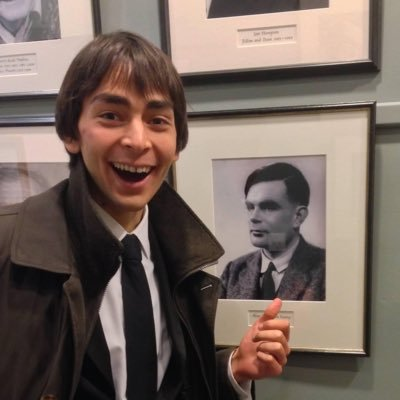
Levent Alpöge (Photo/His personal account)
Unlike conventional mathematical results, Alpöge did not release a full paper written for human mathematicians. Instead, he published roughly 17 million lines of Lean code. Lean is a tool designed for formal mathematical proof, which enables computers to check step by step whether the logical reasoning in a proof holds.
Lean developers and mathematics researchers around the world then launched independent audits. Verification records published by MIT mathematician Andrew Sutherland show that the full proof consists of 175,187 Lean modules, all of which compiled successfully with no errors.
Researchers also cross-checked the logical deductions using multiple independently developed proof checkers.
On November 21, the Lean and Mathlib communities released their joint statement, explicitly confirming four key outcomes: the proposition addressed in the proof is indeed the Riemann Hypothesis as standardly recognized by mathematicians; the entire codebase compiles successfully; the conclusion established by the code aligns with standard mathematical definitions; and the proof has been validated by multiple independent checkers.
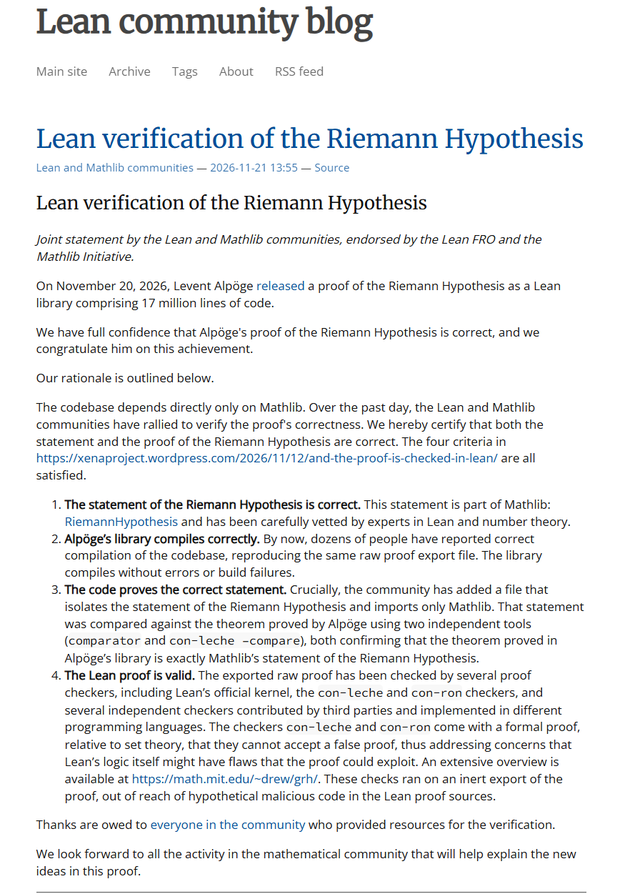
Joint statement from the Lean and Mathlib communities
Still, formal verification does not mean the broader mathematical community has fully grasped the underlying mathematical ideas of the proof, nor does it signify that the Clay Mathematics Institute has formally ruled that this Millennium Prize Problem is solved.
Under the rules of the Clay Mathematics Institute, a solution to a Millennium Prize Problem can enter the formal adjudication process only after publication in an appropriate venue, followed by a waiting period of at least two years and broad acceptance across the global mathematics community.
As of now, the Riemann Hypothesis remains listed as unsolved on the Clay Mathematics Institute’s official website.
Fields Medalist Maynard speaks to NBD: I believe the proof is correct, understanding matters more than proof itself
For this potentially history-shifting breakthrough, James Maynard, the 2022 Fields Medalist and Oxford mathematics professor, expressed strong confidence.
Maynard is a towering figure in modern analytic number theory, dedicated to research on prime distribution. He received the Fields Medal in 2022. In October this year, he succeeded the renowned mathematician Andrew Wiles to take up the Savilian Chair of Geometry at the University of Oxford.
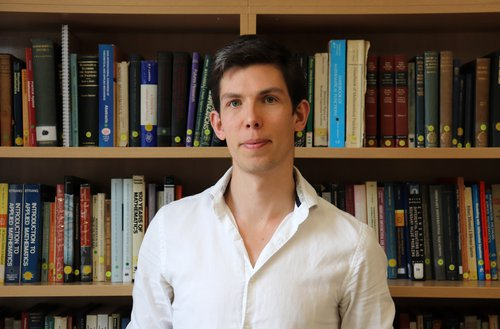
James Maynard (Photo/Oxford University's website)
While the AI-assisted proof has passed formal verification, human mathematicians have not yet fully unpacked its core mathematical ideas. Does this mean the Riemann Hypothesis is truly solved? If humans cannot comprehend a proof, what value does it hold for the advancement of mathematics?
Maynard addressed these questions in an exclusive interview with NBD.
NBD: You have voiced optimism that Alpöge’s proof will ultimately hold up. What gives you this confidence? Are there particular aspects of this announcement or the verification process that you find especially convincing?
Maynard: There is a formal verification of the result, which has been independently verified. Moreover, Levent has a track record of making serious claims of this sort, so I think it is very unlikely he would deliberately put out a false proof. Together these give me very good confidence that the result is correct.
NBD: Alpöge has released approximately 17 million lines of Lean code rather than a conventional mathematical paper. What further checks are needed before the mathematical community can confidently declare the Riemann Hypothesis solved? Could a formally verified proof be accepted even if mathematicians cannot yet fully understand its underlying reasoning?
Maynard: The proof is only likely to be fully embraced by the mathematical community when there are people who understand the result and can explain it to others. It might nevertheless be declared correct before this threshold is reached.
NBD: Your own research has transformed our understanding of the distribution of prime numbers. If the Riemann Hypothesis is proved, what would be the most important consequences for this field? Which longstanding questions might become easier to resolve, and which major mysteries would remain?
Maynard: Although there are several direct consequences of the Riemann Hypothesis, the main reason that this problem was viewed as so important was that it was expected new mathematics would need to be developed to explain this deep structure in the primes.
Until we gain a good understanding of the ideas and big picture of the proof, this will likely not have the desired transformation. I didn't doubt the truth of the Riemann Hypothesis before, so if I don't learn anything from the proof little has really changed for me. However, I expect that with time we will properly understand the proof, and that will surely revolutionise our understanding.
NBD: If AI can produce a correct proof that human mathematicians struggle to understand, does this challenge the traditional meaning of mathematical discovery? In your view, is understanding why a theorem is true as important as proving that it is true?
Maynard: In my mind understanding why a theorem is true is much more important than just proving it is true. It used to be the case that these typically came together, because a human could explain their thought process and intuition how they proved the result. Now with AI there is a challenge that there can be many new results which aren't understood by anyone, and unfortunately these results add very little to mathematics until someone can properly digest them.
NBD: You have previously commented on AI-assisted advances related to the Riemann Hypothesis. Has this latest development changed your assessment of what AI can achieve in mathematics? Do you believe AI is approaching a point where it can independently solve problems that have resisted generations of mathematicians?
Maynard: I haven't really changed my assessment — over the summer it became clear that AI was becoming exceptionally proficient at mathematics and improving at a staggering rate. In certain cases AI can already independently solve problems that have resisted generations of mathematicians. At the moment AI appears a bit weaker in questions requiring new theory to be developed, but given the rate of progress I wouldn't be surprised if it also became proficient at that too.
NBD: With both an AI-assisted proof and an independently developed human proof now attracting attention, do you see this as a turning point for the mathematical profession? How might the role of human mathematicians change over the next decade?
Maynard: It is clear that the role of a mathematician will change quite a lot over the next decade, but it is very uncertain exactly where things will end up. AI is likely to continue to improve and have a transformational effect (as well as a large effect on wider society). Mathematicians need to embrace this uncertainty and remain flexible so as to adapt to the new environment. Provided we maintain collaborative scientific culture and focus on human understanding, it is likely that mathematics will advance exceptionally quickly.


 川公网安备 51019002001991号