Photo/Screenshot
On the early morning of October 29, Beijing time, the Federal Open Market Committee (FOMC) voted 10 to 2 to keep the federal funds rate unchanged at 3.75%–4.00%.
Two members dissented from the decision: Federal Reserve Governor Lisa Cook and Cleveland Fed President Beth Hammack favored raising interest rates by 25 basis points.
In a brief statement, the Committee stated: "Inflation remains elevated. As additional information accumulates, the Committee will be better positioned to determine the appropriate stance of monetary policy to ensure a timely return to the 2% inflation target. The Committee remains committed to achieving price stability."
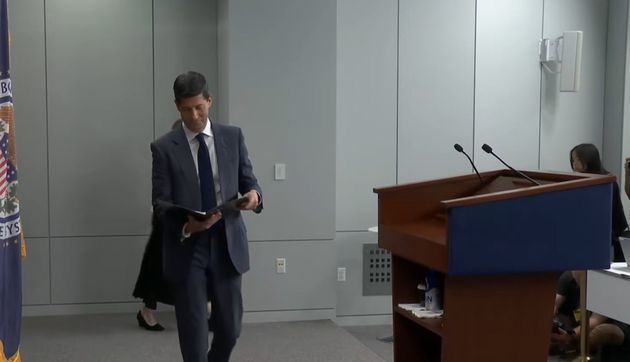
In addition, Federal Reserve Chair Kevin Warsh strongly rejected the concept of "forward guidance" at the subsequent press conference, announcing that the number of FOMC rate-setting meetings will be reduced starting next year.
In an exclusive interview with National Business Daily (NBD), Patrick T. Harker, former President of the Federal Reserve Bank of Philadelphia, stated that pausing rate hikes does not signify a shift toward monetary easing, but is rather intended for observation.
He believes that the Federal Reserve may raise interest rates by another 25 basis points in December this year and then hold rates steady throughout 2027. Furthermore, with the Fed Chair no longer providing "forward guidance," public remarks by the Vice Chairs have become the most valuable signal for gauging policy direction.
Patrick T. Harker served as the 11th president and chief executive officer of the Federal Reserve Bank of Philadelphia from 2015 until his retirement in 2025. In this role, Harker participated on the Federal Open Market Committee, which formulates the nation’s monetary policy.
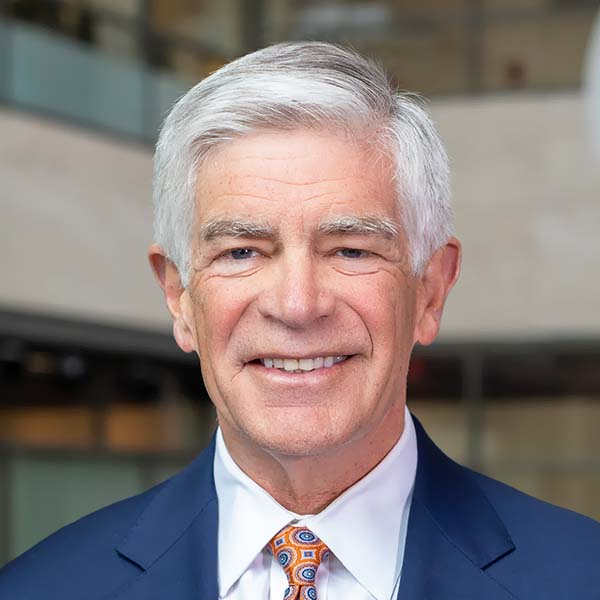
Patrick T. Harker Photo/website of the Federal Reserve Bank of Philadelphia
NBD: What specific economic data does the Fed need to see before taking further rate-hike action? Among inflation, employment, and economic growth, which indicators are currently most critical for the Fed's decision-making?
Patrick T. Harker: Three numbers.
Core PCE inflation is running about 3.0 percent year over year, a full point above target, and the Committee's own September projection has it at 3.4 percent for 2026. September CPI rose 0.6 percent on the month and 3.7 percent over the year, with gasoline up 9 percent in a single month.
And the labor market is cooling but not breaking: 29,000 payrolls, 4.2 percent unemployment, wage growth at 3.0 percent, which means real earnings fell 0.5 percent in September.
The inflation side carries the decision. The Committee hiked in September on a 12-0 vote with unemployment at 4.2 percent. In my reading, the bar for another increase is not a stronger labor market; it is core inflation that stops declining.
My own view is that one more quarter point this year is appropriate, most likely in December, taking the range to 4.00 to 4.25 percent, and then a hold through 2027 to see how the data evolve. That is close to where the Committee's own September median sits, at 4.1 percent for year end. A hold is not a pivot. It is a pause to find out whether a 4 percent funds rate against 3 percent core inflation is enough, and the test for resuming is simple: core PCE that stops declining.
NBD: Is a Fed under Kevin Warsh shifting away from traditional forward guidance? What does this mean for monetary policy effectiveness?
Patrick T. Harker: Yes, and deliberately. Since June, the statement has been cut in half, the path language has been removed, the Chair has declined to submit a dot, and the press conference question period runs for about 15 minutes. In Bangkok last week, he said the Fed is "not in that business anymore."
The cost is a wider distribution of outcomes around every meeting. Real and nominal Treasury yields have risen materially since June; some of that reflects inflation, and some reflects a term premium for a central bank that now surprises. Effectiveness depends on whether the reaction function stays legible even when the rate path does not. So far it has.
NBD: Do markets need to relearn how to interpret Fed policy signals? Under a new communication framework, should investors focus on?
Patrick T. Harker: With the Chair declining to discuss the rate path, the Vice Chairs' public remarks have become the most informative signal on timing. On September 29 in Buffalo, John Williams said one more hike in 2026 was probably enough and that there was no urgency to go back-to-back; Philip Jefferson said two days later that officials "may take more time." October hike odds fell from about 70 percent to 25 percent in a week. Williams reiterated on October 13 that he sees no need for a 2027 hike.
That is forward guidance by another name. Watch them, then the statement, then the press conference. A shorter statement with no guidance makes every word that survives carry weight; the June and September statements both named supply shocks and both reaffirmed the commitment to price stability.
One caveat: a communications task force reports by year-end, and the Chair said in June that its scope covers the projections, the minutes and the press conferences.
NBD: The Fed does not explicitly signal a December rate hike at the October meeting but continues to emphasize inflation risks, is the market likely to underestimate future policy tightening risks?
Patrick T. Harker: Markets have already priced in a pause, largely based on the Vice Chairs' public remarks rather than the statement, and December pricing survived it. So, the near-term risk of markets underpricing tightening is lower than it looked in September.
The risk shifts to 2027. A market that hears "one more and done" from the Vice Chairs may price cuts before the data justify them. If core PCE is still near 3 percent next spring, the gap between a Fed on hold and a market expecting easing is where Treasury yields and the dollar get repriced.
NBD: In your view, what is the greatest communication challenge currently facing the Fed?
Patrick T. Harker: Convincing markets that resolve on inflation does not require a map of the rate path. The old regime bought credibility by pre-announcing; the new one must earn it meeting by meeting, with inflation above 3 percent and headline being pushed around by energy.
Premature pivot bets are the smaller problem right now, because the dots and the September hike have already killed most of them. The larger problem is the opposite: that a Fed that refuses to say "December" gets read as a Fed that doesn't mean it. The cure is the same either way: act when the data demand it and let the record do the talking.


 川公网安备 51019002001991号