
Photo/AIGC
As the 2026 Lunar New Year holiday concludes, the "scorching" subsidies war among Chinese tech giants has entered a critical transition.
Data as of February 24 reveals that while aggressive cash incentives drove record-breaking user acquisition, the industry now faces the three challenges: post-subsidy user retention, technical bottlenecks in complex scenarios, and unproven profit models.
This Spring Festival marked the transition of AI from a niche curiosity to a household utility.
ByteDance’s Doubao maintained its dominant position at the top of the App Store free charts, recording 1.9 billion interactions on Lunar New Year's Eve alone.
Meanwhile, Alibaba’s Qwen successfully bridged the digital divide, with its "one-sentence ordering" feature reaching over 4 million users aged 60 and above.
Tencent’s Yuanbao leveraged its massive social ecosystem to achieve a Monthly Active User (MAU) count of 114 million, though its ranking showed volatility toward the end of the holiday.
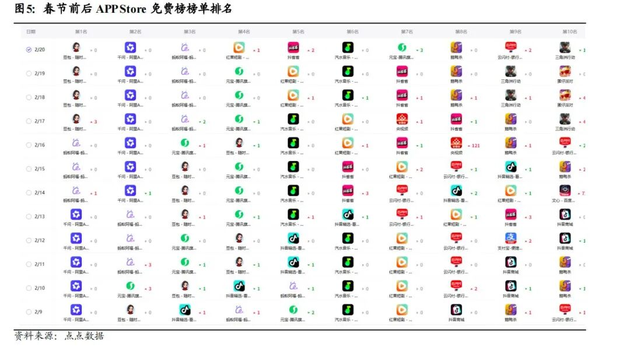
The 2026 "AI Olympics" saw the tech giants validate distinct commercial trajectories based on their core strengths.
Alibaba adopted a "Model + E-commerce + Traffic" strategy, integrating Qwen 3.5 with its vast ecosystem—including Taobao and Alipay—to create a clear commercial closed-loop.
In contrast, ByteDance utilized a "multi-modal saturation" approach, leveraging high-frequency traffic to dominate content and tool-based scenarios. Tencent focused on deepening its competitive moat through "AI-integrated social networking," embedding AI assistants directly into WeChat groups to enhance user engagement.
Industry analysts, including iiMedia Research CEO Zhang Yi, warn that the "bubble" of high Daily Active Users (DAU) may deflate as subsidies recede. The true "touchstone" for success will be long-term retention, which depends on base model capabilities rather than marketing budgets.
Furthermore, the holiday served as a high-pressure test for infrastructure. On New Year's Eve, Doubao was forced to temporarily suspend high-compute video calls to ensure core service stability, highlighting the ongoing challenge of matching AI supply with massive civilian demand.
Simultaneously, the talent war has intensified; with AI-related job postings surging 14-fold in early 2026, top "Application Architect" roles are now commanding annual salaries exceeding 1.28 million yuan.
"The era of hundreds of models is over; an oligopoly era is beginning," Zhang Yi said. "The user acquisition battle is done. The battle for real value has just started."


 川公网安备 51019002001991号