As 2026 marks a pivotal acceleration in the integration of Artificial Intelligence (AI) within the healthcare sector, a profound debate has emerged regarding the balance between technological assistance and the professional growth of young physicians.
Baichuan AI founder Wang Xiaochuan addressed these industry tensions, asserting that "patient welfare must not be sacrificed for the sake of a physician's learning curve."
The debate was recently intensified by Dr. Zhang Wenhong’s reservations about introducing AI into hospital medical record systems, citing concerns that it might erode the diagnostic capabilities of junior doctors.
Wang Xiaochuan countered this perspective, arguing that if a "Junior Doctor + AI" pairing can match the diagnostic accuracy of a senior specialist, withholding such tools is counter-intuitive to medical ethics.
"The ultimate goal of medical AI is to improve the doctor-patient relationship," Wang stated. He emphasized that in primary care and clinical decision support, AI allows younger practitioners to perform at an elite level, significantly reducing the risk of misdiagnosis and omission.
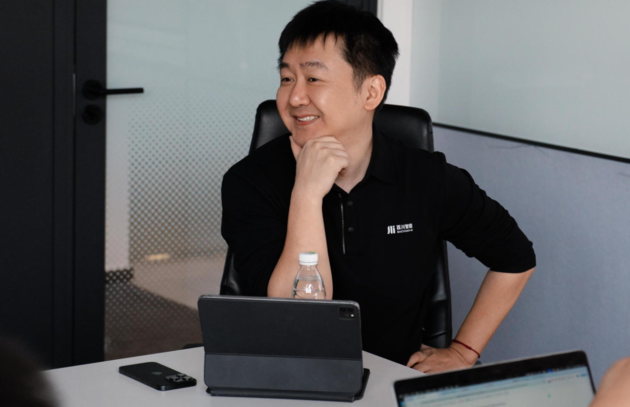
Wang Xiaochuan Photo/provided to NBD
Wang criticized the prevalence of exaggerated marketing within the domestic AI industry, calling for a more "truth-seeking" approach to foster healthy competition.
He argued against hospitals attempting to build their own large language models (LLMs). "The strongest medical AI won’t be coded by doctors," Wang remarked, noting that just as Go champions did not build AlphaGo, doctors should focus on being expert users rather than developers.
The emergence of Chain-of-Thought (CoT) reasoning—catalyzed by models like DeepSeek—has shifted the narrative from "AI hallucination" to "AI logic." Wang contends that modern AI can now simulate clinical reasoning with a level of detail that often surpasses human capacity.
Wang outlined a trajectory for AI evolution in medicine based on three tiers:
Weak AGI: Reaching the professional benchmark of a standard practitioner.
Strong AGI: Achieving the level of world-class experts (the "Einsteins" of medicine).
ASI (Super Intelligence): Surpassing total human cognitive limits.
While robotic surgery (embodied AI) may take longer to mature, Wang predicts that AI’s ability to conduct logical inquiries, interpret patient cues, and guide consultations will reach a professional standard within the next three years.
"The question is no longer whether the model is smart enough," Wang concluded, "but whether the healthcare system is ready to restructure its workflows to let AI enter the core decision-making chain."


 川公网安备 51019002001991号