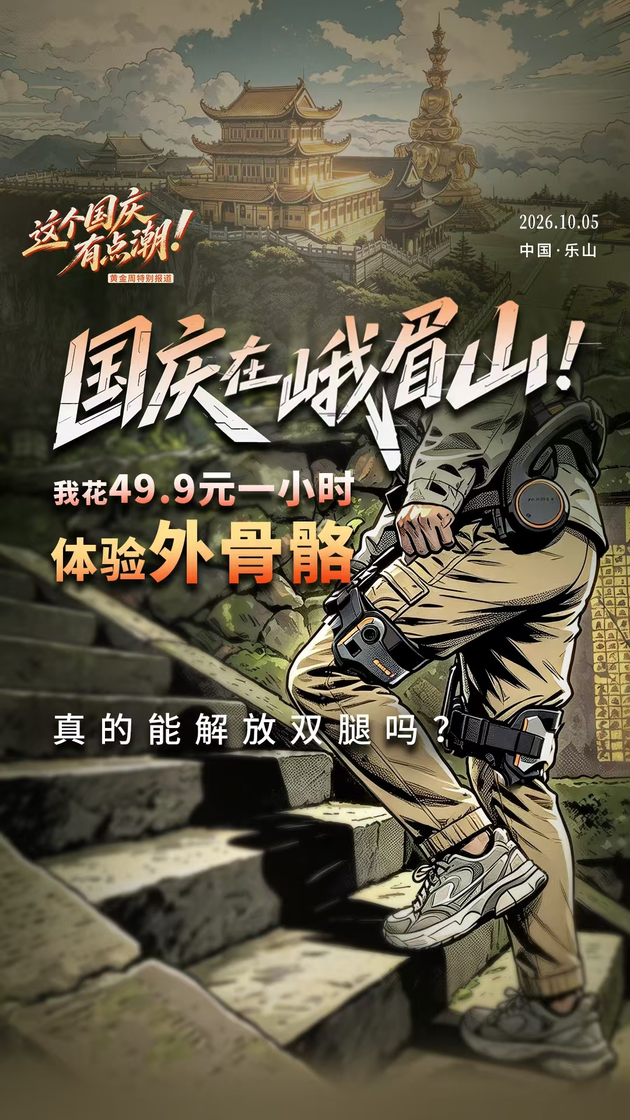
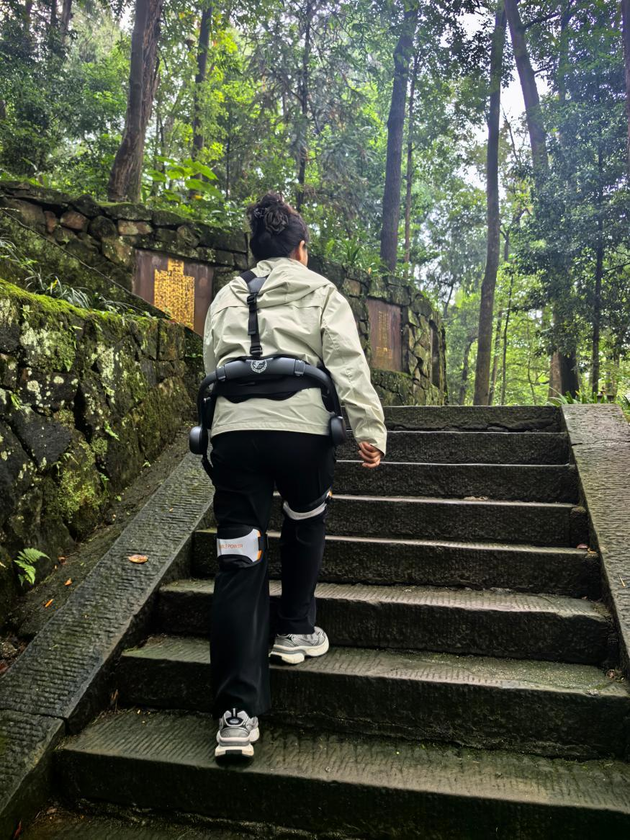
"Right as you're about to lift your leg, you can clearly feel an upward force supporting your thigh. It feels much easier than climbing on your own," said a tourist in his 50s shared on a stone stair trail at Mount Emei, wearing a hiking assistance exoskeleton robot.
During the China's Golden Week, Mount Emei saw a surge in visitors. Among the crowds carrying traditional trekking poles, steep flight-of-stairs trails often turn into stamina-draining endurance tests for beginner hikers.
However, physical exertion is no longer the only way to conquer the mountain. As exoskeleton robots emerge as a popular trend across major Chinese tourist destinations, visitors can now experience these wearable leg "mechas" firsthand.
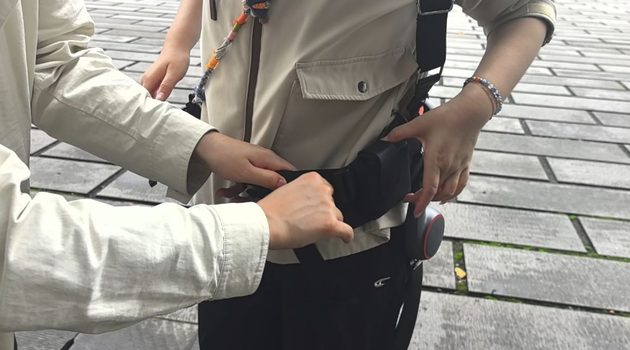
The setup process is simple and fast. "Fasten it at the waist, secure the thigh straps tightly; press briefly then hold the left switch to turn on the power; use the right switch to adjust between five speed and assistance levels," an staff member explained. The entire fitting process takes less than a minute.
Weighing roughly 2 kilograms, the unit sits around the waist to provide distinct lower-back support. Two mechanical arms run alongside the outer thighs and fasten just above the knees. It avoids the awkward clunkiness often associated with heavy machinery, feeling more like wearing a lightweight backpack that leaves squatting and standing movements completely uninhibited.
According to scenic spot staff, the device provides approximately 10 kilograms of assistance force. Field-tested metrics indicate that the exoskeleton reduces physical exertion by roughly 30%. While its assistance is primarily effective during ascents rather than descents, the real-world sensation is tangible. Users report being pulled upward during each step, allowing them to climb stairs faster and with far less breathlessness. Power is supplied by two batteries, lasting between 5 and 6 hours of continuous operation.
The five assistance levels cater to different user profiles and terrain types:
Levels 1 and 2: Ideal for flat ground or controlled downhill steps.
Levels 3 and 4: Tailored for standard climbing paces and average body weights.
Level 5: Provides maximum output designed for heavier individuals (typically over 80 kilograms). On flat ground, this setting generates noticeable inertial jitter and is less recommended for lighter users.
"The power levels are calibrated based on user weight," explained Liang Zhihao, Project Manager at Sichuan Lingchuang Shuzhi Technology Co., Ltd., a subsidiary of Emei Shan Tourism Co., Ltd. "For safety reasons, these devices are currently not open for use during heavy rain or snow to prevent risks caused by improper operation on slippery surfaces."
Mount Emei currently operates approximately 200 exoskeleton units distributed across 8 deployment hubs. Tourists can rent a unit by scanning a QR code and placing a deposit—a process as seamless as renting a shared power bank—with staff on-site to assist with fitting. Rental pricing is set at 49.9 yuan per hour, with a daily cap of 300 yuan.
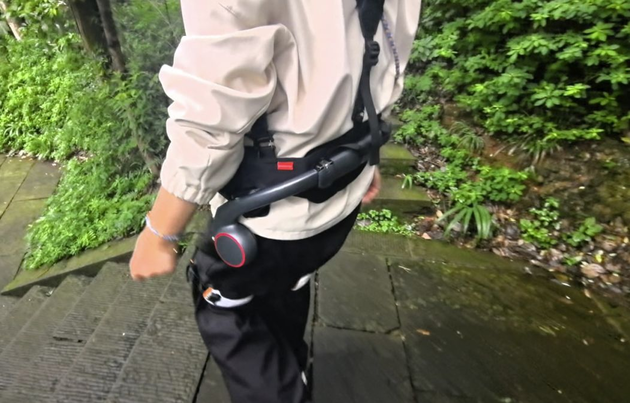
Intriguingly, while users adapt to the mechanical assistance almost instantly, removing the "smart legs" creates a striking contrast—one's real legs temporarily feel noticeably heavier when resuming unassisted climbing or descending.
The physical barrier to mountain hiking is rapidly lowering. Mount Emei’s deployment is a snapshot of a broader nationwide trend across China's tourism industry. Over 50 major scenic spots—including Mount Tai, Mount Hua, Mount Huang, Mount Wuyi, the Enshi Grand Canyon, and the Badaling Great Wall—have introduced commercial exoskeleton rental services, frequently selling out during peak holiday seasons.
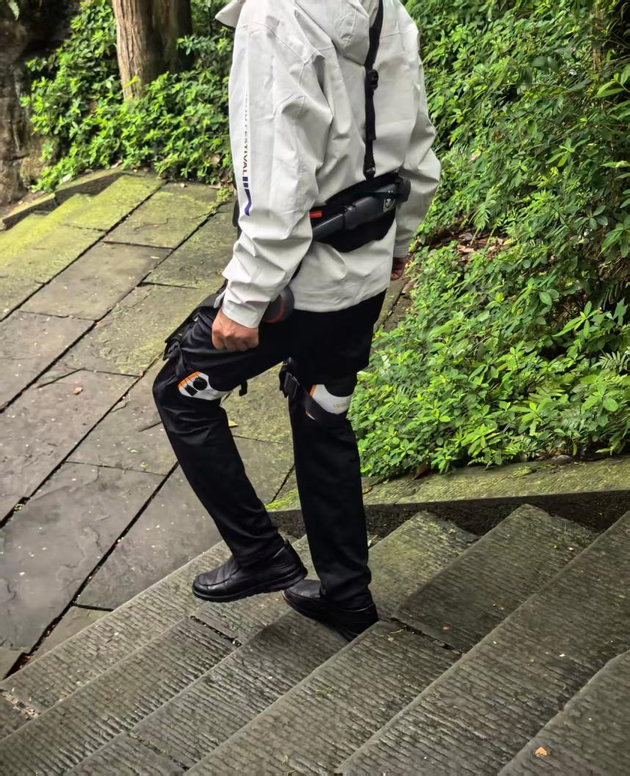
Equipped with AI-driven gait recognition, these adaptive exoskeletons recognize user movement in real time to deliver dynamic torque on inclines and stairs. Simultaneously, scenic spot operations are shifting away from manual physical assistance toward intelligent equipment maintenance and fleet management.
Liu Haibo, Chairman of Lingchuang Shuzhi and Securities Representative at Emei Shan Tourism Co., Ltd., views this technology as a fundamental shift in tourism infrastructure: "Exoskeletons represent an innovative way to enhance service quality. Moving forward, assistive exoskeletons will become a standard mobility service at mountain destinations—offering visitors a foundational alternative for climbing, much like choosing between high-speed rail, air travel, or automobiles for transit.


 川公网安备 51019002001991号