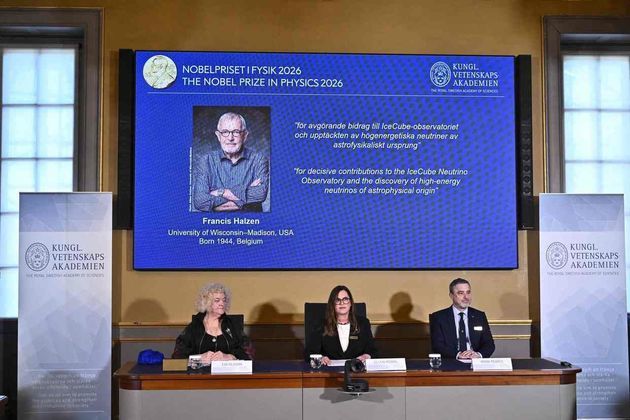
On October 6, Francis Halzen, the driving force behind the IceCube Neutrino Observatory in Antarctica, was awarded the 2026 Nobel Prize in Physics as the sole laureate.
His achievement has brought renewed attention to a remarkable scientific connection between two observatories separated by thousands of kilometers: IceCube in Antarctica and China's Large High Altitude Air Shower Observatory (LHAASO) in Daocheng, Sichuan Province.
One has its detectors embedded between 1,450 and 2,450 meters beneath the Antarctic ice surface, searching for elusive cosmic particles known as neutrinos, often nicknamed "ghost particles."
The other stands at an altitude of 4,410 meters in the mountains of southwestern China, detecting ultra-high-energy gamma rays and cosmic rays.
Despite relying on fundamentally different detection methods, the two observatories are pursuing the same century-old mystery: Where do the universe's highest-energy particles come from?
In theory, high-energy neutrinos and gamma rays can be produced together in the same extreme astrophysical processes. The dozens of ultra-high-energy gamma-ray sources identified by LHAASO could therefore provide crucial clues in the global search for the origins of high-energy neutrinos.
Halzen himself is no stranger to LHAASO.
In 2025, when the Chinese observatory announced significant findings concerning the origin of the cosmic-ray "knee," a longstanding puzzle in astrophysics, Halzen was among the international scientists invited to comment on the results.
Following the announcement of the 2026 Nobel Prize in Physics, National Business Daily (NBD) conducted an exclusive interview with Cao Zhen, an academician of the Chinese Academy of Sciences and chief scientist of LHAASO.
Having maintained academic exchanges with Halzen for more than two decades, Cao discussed the Nobel laureate's contributions to astrophysics, the scientific connections between IceCube and LHAASO, and the challenges facing the next generation of neutrino observatories.
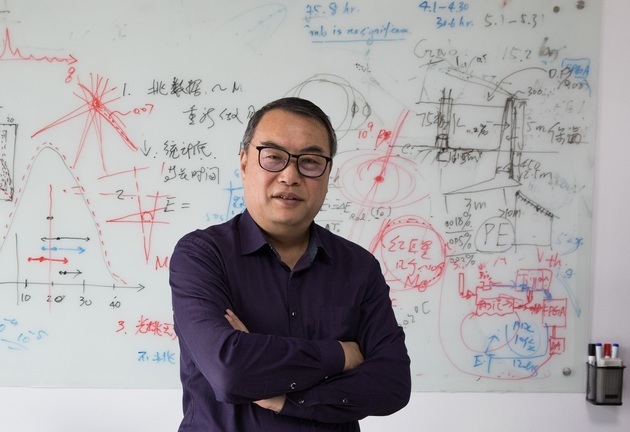
Cao Zhen
Halzen Has Fulfilled the Mission of a "Pathfinder"
NBD: What was your initial reaction when you learned that Francis Halzen had won this year's Nobel Prize in Physics? What exchanges have you had with him over the years?
Cao Zhen: This is a tremendous encouragement for the development of multimessenger astronomy, particularly neutrino astrophysics. It demonstrates the profound impact of this field. I sincerely congratulate Professor Halzen on receiving this prestigious honor.
Halzen is one of the most influential astrophysicists of our time. He possesses profound insights into the development of the field.
In 2024, I made a special trip to the University of Wisconsin to visit him. We had in-depth discussions about the design of future high-energy neutrino telescopes and their primary scientific objectives.
Those discussions were enormously encouraging to me and contributed significantly to refining our scientific plans.
He has also closely followed LHAASO's scientific achievements. At my invitation, he offered insightful comments on LHAASO's precise measurements of the cosmic-ray proton energy spectrum and its discovery of a high-energy component.
Our academic connection goes back more than 20 years.
At that time, I was conducting research using the HiRes cosmic-ray experiment at the University of Utah in the United States. Halzen served as an external expert evaluating my research, and his assessment had an important influence on my subsequent scientific career.
NBD: How would you evaluate Halzen's contributions, and those of IceCube, to particle astrophysics?
Cao Zhen: Professor Halzen is a theoretical physicist whose influence has been both extensive and profound.
He co-authored Quarks and Leptons, which was one of the principal textbooks I used to study particle physics and gauge field theory during my graduate studies.
In my view, one of his most remarkable abilities is his exceptional judgment in identifying major scientific directions and making crucial scientific decisions.
From AMANDA — the Antarctic Muon and Neutrino Detector Array, the predecessor of IceCube — to IceCube itself, he played a decisive role in advancing the establishment of two successive generations of Antarctic neutrino telescope experiments.
He also possesses extraordinary leadership and organizational abilities.
He brought together institutions from around the world to form the international IceCube Collaboration and overcame enormous challenges to construct a major scientific facility in Antarctica, one of the most extreme environments on Earth.
The result was the largest experimental facility, in terms of investment, in the century-long history of cosmic-ray exploration.
Thanks to IceCube's neutrino detection sensitivity, researchers measured a flux of neutrinos with energies exceeding 0.1 petaelectronvolts in 2012. This flux significantly exceeded the background of neutrinos produced in Earth's atmosphere, providing evidence of high-energy neutrinos originating beyond the solar system.
Although the observed flux was extremely faint and appeared to arrive from nearly all directions, without a statistically significant excess from any single direction, the observations established an effective method for detecting extraterrestrial high-energy neutrinos.
In that sense, IceCube fulfilled its mission as a "pathfinder."
It opened a new window for exploring the mysteries of the distant universe through neutrinos, particularly high-energy neutrinos associated with extreme astrophysical processes.
That achievement is of enormous scientific significance.
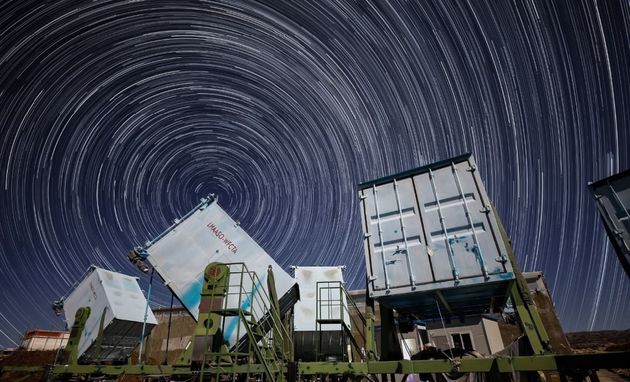
LHAASO Wide Field of View Cherenkov Telescope Array
LHAASO in Sichuan Identifies Promising Candidates in the Search for High-Energy Neutrino Sources
Located on Haizi Mountain in Daocheng, Sichuan Province, LHAASO was independently designed, constructed and is operated by Chinese scientists.
On November 16, 2025, the Institute of High Energy Physics of the Chinese Academy of Sciences announced two major LHAASO research findings related to the origin of the cosmic-ray "knee" — a distinctive change in the slope of the cosmic-ray energy spectrum that has puzzled physicists for decades.
Halzen spoke highly of these Chinese scientific achievements.
NBD: What is the scientific connection between LHAASO and IceCube?
Cao Zhen: The description of this year's Nobel Prize-winning achievement explicitly notes that significant evidence identifying neutrino sources has yet to be established.
Strictly speaking, without identifying individual sources, one cannot yet conduct astronomy in its fullest sense.
But to discover these sources, we need clues. The best approach is to search among promising candidate astrophysical objects.
The ultra-high-energy gamma-ray sources discovered by LHAASO are among the most promising candidates.
Theoretically, ultra-high-energy neutrinos should be accompanied by gamma rays produced through related physical processes.
When high-energy cosmic-ray particles collide with interstellar matter surrounding their sources, they can produce neutral particles that decay into two gamma-ray photons, as well as charged particles whose decays produce neutrinos.
To use an analogy, gamma-ray photons and neutrinos are like twins, but they have very different personalities.
Gamma rays are relatively easy to detect. LHAASO, with a detection area of approximately one square kilometer, has already discovered dozens of ultra-high-energy gamma-ray sources.
Their neutrino counterparts, however, are naturally elusive — almost invisible.That is why neutrinos are often called "ghost particles."
Despite its instrumented volume of approximately one cubic kilometer, IceCube has not yet effectively detected the individual sources of interest at the required sensitivity.
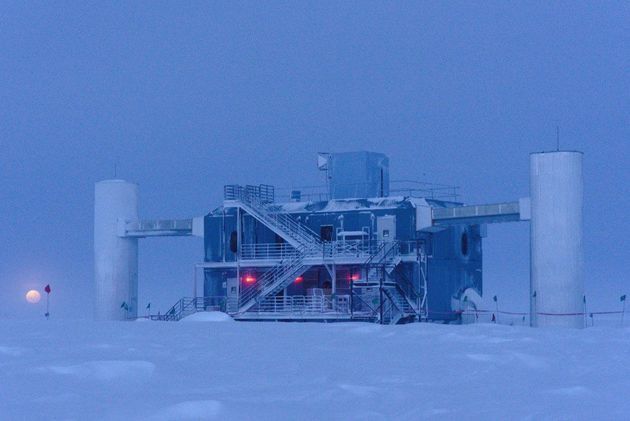
IceCube
This illustrates a fundamental limitation: compared with gamma-ray detection, neutrino detection remains severely constrained by sensitivity.
The next generation of neutrino observatories must therefore achieve substantially greater sensitivity.
According to our estimates, a detector with a volume of approximately 30 cubic kilometers will be necessary.
In other words, LHAASO primarily observes ultra-high-energy gamma rays and cosmic rays, whereas IceCube focuses on high-energy neutrinos.
Nevertheless, both are investigating the same category of extreme particle-acceleration processes occurring in the universe.
There is, however, an essential difference between their current capabilities.
Humanity already possesses gamma-ray and cosmic-ray detectors with sufficient sensitivity to conduct highly precise measurements.
Neutrino detection, by comparison, is still at a relatively early stage. We have found a path forward, but we do not yet have sufficient sensitivity to resolve the individual sources we are seeking.
The many ultra-high-energy gamma-ray sources identified by LHAASO are therefore among the most promising possible origins of high-energy neutrinos.
If neutrinos can eventually be detected from these same sources, it would undoubtedly provide crucial evidence toward solving the mystery of cosmic-ray origins.
NBD: Based on LHAASO's observations so far, are there particular astrophysical sources that you would especially like IceCube or other next-generation neutrino telescopes to investigate?
Cao Zhen: Yes. There are several particularly interesting candidates, especially objects closely associated with black hole accretion processes.
I recall an interesting experience involving Francis Halzen.
During China's National Day holiday in 2024, when LHAASO was presenting results concerning the discovery of a group of ultra-high-energy gamma-ray sources known as microquasars, I happened to be attending a seminar with Halzen in a small meeting room at the University of Wisconsin.
Naturally, microquasars became the subject of our discussion that day.
Halzen immediately expressed his conviction that microquasars were among the best candidates for identifying the origins of neutrinos and cosmic rays.
He was so confident that he even said: "I bet my wallet on it!"
However, IceCube's current sensitivity is certainly insufficient to accomplish this task.
Based on the gamma-ray intensities measured by LHAASO, if the associated neutrinos are indeed produced through the expected physical processes, even IceCube-Gen2 may lack the sensitivity required to detect neutrinos from these sources at a statistical significance of five standard deviations over a ten-year observation period.
This is indeed a formidable threshold that nature has placed before us.
Halzen Praises China-Russia Plan for a 30-Cubic-Kilometer Neutrino Observatory
NBD: Does Halzen's Nobel Prize suggest that we are entering a new era of multimessenger astronomy, in which neutrinos, gamma rays, cosmic rays and gravitational waves are all used to study the universe? Where might the next major breakthrough occur?
Cao Zhen: The window of multimessenger astronomy has, in fact, already opened.
Based on LHAASO's discoveries, I believe neutrino astronomy offers one of the most promising opportunities for the next major breakthrough.
If neutrino detection sensitivity can be improved by a factor of 30, we may finally be able to "see" individual ultra-high-energy neutrino sources.
NBD: China already operates LHAASO in Daocheng, Sichuan, and is pursuing other projects, including a deep-sea neutrino telescope in the South China Sea. How would you assess China's current position in particle astrophysics and multimessenger astronomy?
Cao Zhen: LHAASO has opened a new observational window for ultra-high-energy gamma-ray astronomy.
The number of such identified sources has already exceeded 60.
These discoveries have not only helped define the future direction of gamma-ray astronomy but also established scientific targets for upcoming gamma-ray telescope projects, including LACT in China, ASTRI in Italy and LST-CTAO in Europe.
At the same time, they provide clear observational targets — and even quantitative objectives — for future neutrino research.
China is therefore developing its own neutrino detection plans to address the substantial challenges posed by nature and explore possible solutions.
Beyond the deep-sea initiative already mentioned, one of the central challenges is reducing the cost of constructing large-scale detection facilities.
We must find ways to build detectors of sufficient scale and sensitivity while working within limited research budgets.
International cooperation, bringing together scientists from around the world who share the ambition of achieving a breakthrough in neutrino astronomy, is almost certainly an essential path forward.
China and Russia are currently working to advance a proposal for an ultra-large neutrino telescope based at Lake Baikal.
The project aims to take advantage of the exceptional properties of Lake Baikal's water to construct Baikal-HUNT, a neutrino detector with a target instrumented volume of approximately 30 cubic kilometers.
Building on this initiative, we are expanding the scope of international cooperation and bringing together more scientific institutions and researchers to pursue this ambitious objective.
Francis Halzen has expressed strong appreciation for the project and has offered important suggestions and considerable encouragement.


 川公网安备 51019002001991号