Gucci has launched sports sneakers bearing the "Made in China" label, marking a notable departure from its decades-long tradition of exclusively relying on "Made in Italy" origins for its footwear collections.
According to product listings on Gucci’s official website, two new men’s sneaker models from the brand's Primavera collection are explicitly labeled as "Made in China."
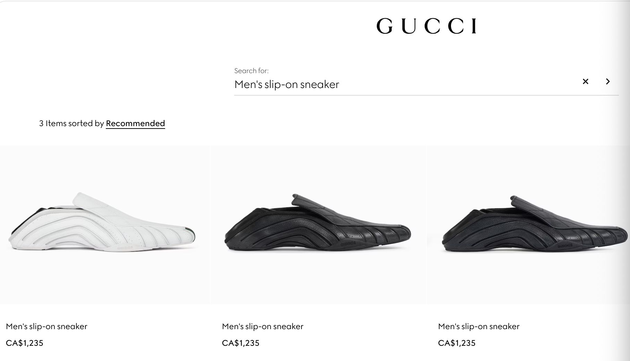
Among them is the Men's Drip sneaker—the first sneaker designed by Demna since joining Gucci as Creative Director in 2025—retailing at $1,050 (approximately 7,050 yuan) for its sand and brown GG canvas edition. The other model, the Men's slip-on sneaker in black leather, is priced at $950 (approximately 6,380 yuan).
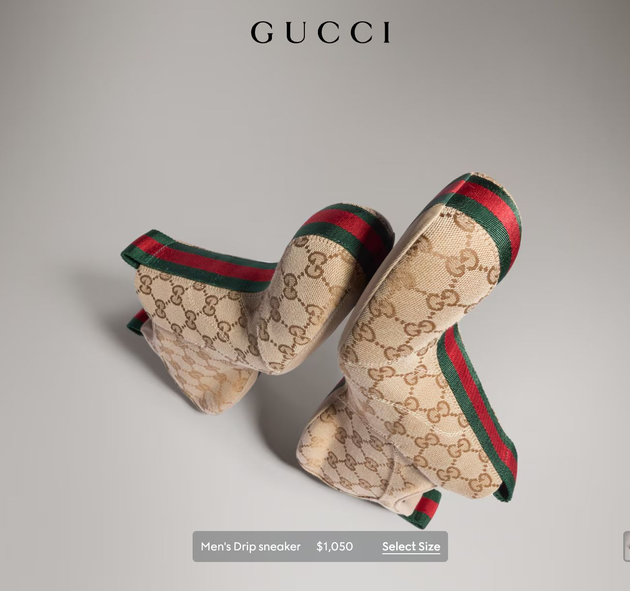
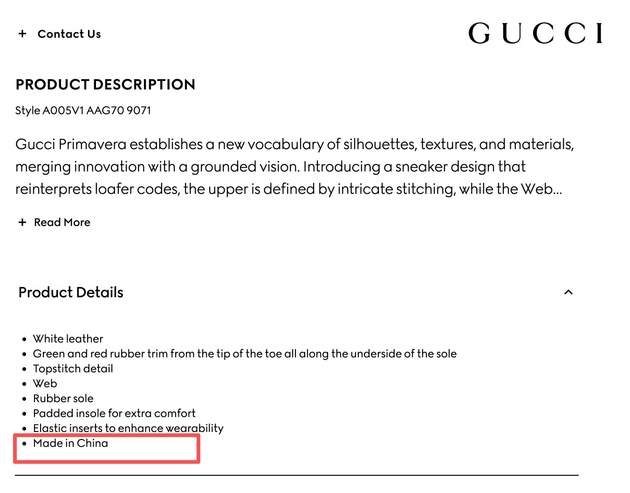
Technical Expertise Drives Sourcing Decisions
Gucci’s shift has drawn industry attention due to the long-standing consumer association between luxury footwear and Italian manufacturing traditions, such as the specialized vulcanized rubber sole techniques concentrated in Apulia and Marche. However, market observers note that Chinese suppliers are increasingly entering the high-end athletic footwear domain. For Demna's newly designed model, there is currently no evidence indicating that Italian manufacturers could execute the specific product features in the same manner.
Regarding the sneakers, a Gucci source emphasized that luxury is about "pursuing excellence without compromise and bringing together the finest innovation, craftsmanship and technical expertise."
"While Italy is and will always remain at the heart of Gucci's manufacturing model and identity, and the vast majority of Gucci products are manufactured there, the House has long worked with specialised centres of excellence across different product categories when they offer unique capabilities," the source noted, drawing a parallel to Gucci's use of Swiss suppliers for watches and Japanese partners for select eyewear collections.
For these two high-end sneaker models, Gucci sought the expertise best suited to support a highly innovative and technically advanced product development process. "The partner selected offered the technological know-how and capabilities considered most appropriate for achieving the performance and quality standards required," the source added, noting that "these sneakers do not sit at the lower end of Gucci's footwear styles’ price architecture, which always reflects the specific design, construction and technical characteristics of the footwear."
Fashion industry analyst Tang Xiaotang pointed out in an interview with NBD that global supply chain division is already standard practice in the luxury sector. A product's raw materials, components, manufacturing, and assembly are frequently distributed across regions, with the origin label determined by regulatory standards rather than representing the entire production lifecycle.
Business Context: Navigating 12 Quarters of Sales Decline
The production changes come as Gucci navigates broader operational realignments. In the second quarter of 2026, Gucci reported revenues of approximately €1.4 billion—a 4% decline year-over-year. Although an improvement over the 8% drop in Q1, it marks the brand's 12th consecutive quarter of falling sales. In 2025, full-year revenues fell 19% on a comparable basis to €5.992 billion.
To re-engage "aspirational consumers"—who are price-sensitive yet eager to buy luxury—Gucci has been refining its pricing and product mix. Following a 3% to 4% price reduction on select items in China in August, Barclays reported that Gucci implemented further 1% to 2% price cuts across other markets in September.
Addressing questions regarding pricing, the Gucci source clarified that manufacturing choices and pricing strategies are completely independent considerations.
"It is not a pricing story, but rather a broader product transformation story," the source explained. "Gucci is redesigning key elements of its product model with four priorities: strengthening product architecture, applying a fair-value approach to pricing, improving quality and perceived value, and increasing agility through faster product development cycles and more effective open-to-buy management."
On pricing specifically, Gucci's approach is guided by the principle of offering "the right price for each product, at the right positioning and quality level." The source clarified that price reductions over the summer were limited to a small number of products developed under previous creative directions—such as targeted adjustments on the Ace sneaker—and "should not be interpreted as a broader shift in Gucci's pricing strategy."
Ultimately, manufacturing decisions remain driven by category-specific expertise and product quality requirements, while pricing is managed under the House's broader brand strategy.


 川公网安备 51019002001991号