As the Federal Reserve convenes for its September 15–16 monetary policy meeting, financial markets are pricing in a 93.5% probability of a 25-basis-point interest rate hike. If delivered, the move would mark the central bank’s first rate increase since July 2023, representing a sharp pivot from earlier market expectations of an easing cycle.
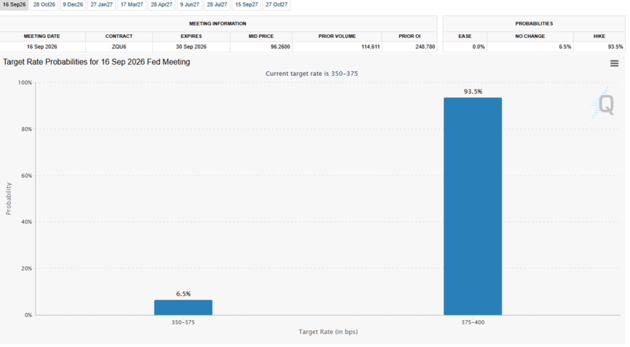
The sudden shift follows persistent inflationary pressures and a hawkish tone from Fed leadership. Headline inflation has been fueled by surging energy prices—with crude oil briefly topping $100 per barrel amid Middle East tensions—alongside sticky core figures. Data released by the U.S. Bureau of Labor Statistics on September 11 showed core CPI rose 0.3% month-over-month in August, higher than anticipated.
In an exclusive exchange with National Business Daily (NBD), Maurice Obstfeld, former Chief Economist at the International Monetary Fund (IMF), former member of the President's Council of Economic Advisers (CEA), and senior fellow at the Peterson Institute for International Economics, detailed the drivers behind the market's rapid repricing.
"Energy prices have spiked up again, plus Chairman Warsh gave a strong indication in his speech last month that he would favor a hike if inflation did not decline toward the 2% target," Obstfeld said to NBD, adding that "both supply side factors and stubborn services inflation are at work."
While Wall Street debates whether a September hike would be a "one-and-done" adjustment or the start of a broader tightening phase, the Fed faces growing political pushback. President Donald Trump has repeatedly called for lower interest rates, asserting that the U.S. should maintain the lowest rates globally. Senior administration officials, including Vice President JD Vance and Treasury Secretary Scott Bessent, have similarly urged against further monetary tightening.
Addressing the intensifying external interference, Obstfeld noted that "the pressure on the Fed under both Trump administrations, but much more so in the current one, is higher than at any time since the Johnson and Nixon administrations. The threat of legal actions against Fed governors is totally new."
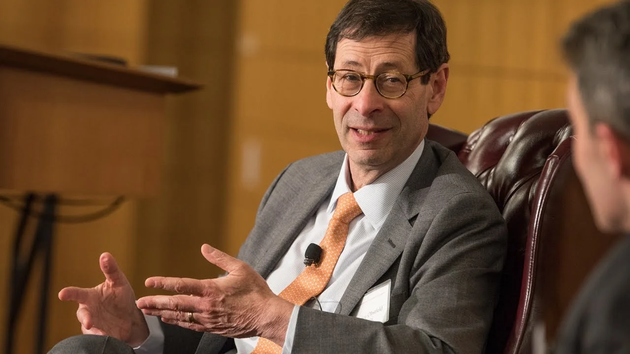
Maurice Obstfeld Photo/Maurice Obstfeld's personal page
These political headwinds are compounded by mounting fiscal strains. Total U.S. federal debt has crossed $40 trillion, with annual interest servicing costs nearing $1.1 trillion. On September 15, the benchmark 10-year U.S. Treasury yield touched 5.02%, surpassing its 2023 peaks to reach its highest level since 2007.
"The high US public debt makes high interest rates very costly in fiscal terms, raising the potential political pressures on the Fed," Obstfeld pointed out to NBD.
Despite the complex environment, Obstfeld emphasized that acting promptly to anchor inflation expectations remains essential for long-term stability. "The Fed can raise interest rates now without seriously raising the recession risk....A timely hike now might help avoid worse problems down the road," he observed.
Ultimately, the central bank must weigh immediate political fallout against its long-term institutional authority.
Disclaimer: The content and data in this article are for reference only and do not constitute investment advice. Please verify before use. Any operations based on this information are at your own risk.


 川公网安备 51019002001991号