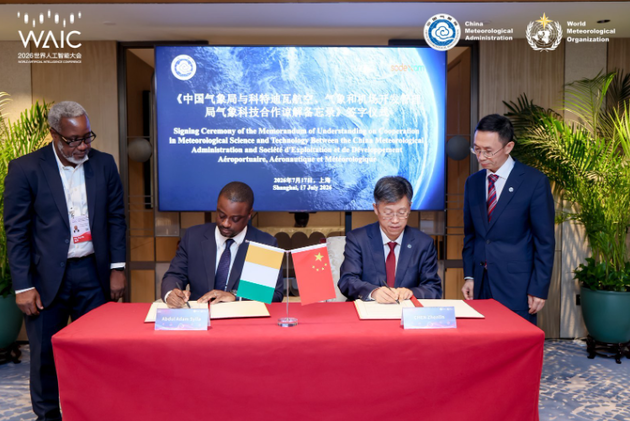
Photo/Provided to NBD
At the 2026 World Artificial Intelligence Conference (WAIC) & High-Level Meeting on Global AI Governance on July 17, Chinese President Xi Jinping proposed expanding China's AI-driven early warning solution, "MAZU," to 30 countries.
During the WAIC Meteorological Session, the China Meteorological Administration (CMA) launched the "Fenghe" AI meteorological service large language model, its global open-source initiative, and the "MAZU" Fengyun Satellite AI Toolbox. The toolbox integrates Fengyun satellite observation with AI technology, transitioning "MAZU" from product-sharing to smart empowerment.
Concurrently, CMA Administrator Chen Zhenlin and Djibouti Meteorological Office Director-General Mohamed Ismail Nour witnessed the official delivery of "MAZU" Djibouti 2.0. Covering the complete "space-air-ground-model-chip-terminal" operational chain, the upgraded version enhances spatial forecast resolution from 9 km to 3 km, providing a 3-day forecast outlook updated every 6 hours.
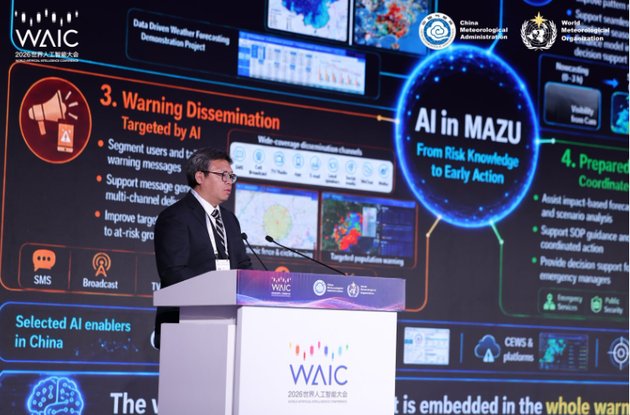
Photo/ Provided to NBD
Launched in July 2025, MAZU stands for Multi-hazard, Alert, Zero-gap, and Universal. It is the world's first national response to the UN Early Warnings for All initiative. The platform integrates multi-source satellite data and AI models ("Fenglei," "Fengqing," "Fengshun") to serve key sectors like energy, agriculture, and transport.
To date, over 40 countries access "MAZU" products via cloud services. Customized versions—tailored through CMA’s "Menu-driven Supply, Customized Service" platform showcased at the 80th WMO Executive Council session—have landed in 7 nations: Pakistan, Ethiopia, the Solomon Islands, Jordan, Sri Lanka, Mongolia, and Djibouti.
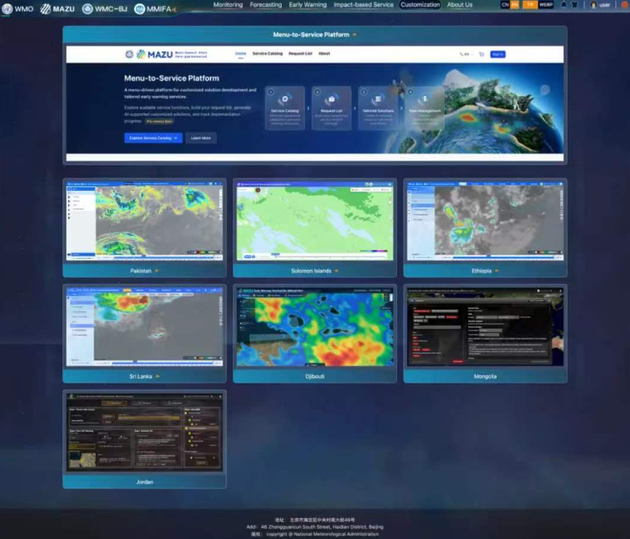
By offering integrated "monitoring-forecasting-warning" capabilities, China provides a scalable, replicable model to help developing nations build localized disaster mitigation systems.


 川公网安备 51019002001991号