After the outbreak of the U.S.-Iran conflict, Li Wei (alias), a Chinese courier business owner in Melbourne, has started each day the same way: checking fuel prices on his phone.
“Diesel at the gas station near my home has risen to AUD 2.9 per liter (about 14.1 yuan), compared with less than AUD 2 a month ago,” Li told National Business Daily (NBD). He calculated that a delivery driver typically travels nearly 400 kilometers a day, and the surge in fuel costs now adds about AUD 40 (193 yuan) per day—meaning 20 extra deliveries are needed just to break even.
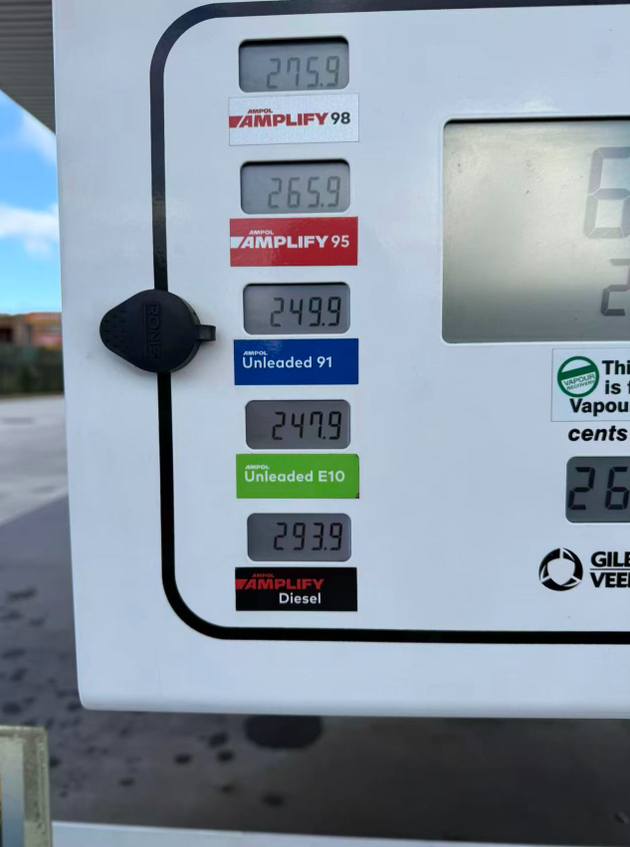
Similar scenes are unfolding across Asia. In Bangkok, where Zhang Ya (alias) has lived for over a decade, panic buying briefly emerged after the Thai government announced a fuel price hike on March 17. She missed refueling that day and had to wait five days before filling her tank.
As tensions in the Middle East escalate and the Strait of Hormuz is effectively shut, about one-fifth of global oil and LNG shipments have been disrupted. Brent crude prices have surged well above pre-conflict levels, transmitting cost pressures directly to consumers worldwide.
From Thailand to Vietnam, fuel prices have climbed sharply. Vietnam’s gasoline prices have risen back above 30,000 dong per liter, compared with less than 20,000 dong before the crisis.
Against this backdrop, consumers are recalculating.
“If this continues, we may have to switch to electric vehicles,” Li said, pointing to an online review of a Chinese electric delivery van.
As queues at gas stations shorten, waiting lists at EV showrooms are growing. In Perth, a sales consultant at a BYD dealership said daily orders have exceeded 10 units since the conflict escalated, extending delivery times. In the Philippines, a BYD dealer reportedly received two weeks’ worth of orders equivalent to a full month’s sales.
In Vietnam, EV maker VinFast has accelerated expansion plans, citing rising fuel costs and geopolitical tensions as drivers of long-term demand. Its Hanoi showroom saw a surge in foot traffic, selling 250 vehicles in just three weeks.
What has changed is not just demand, but the profile of buyers. Previously dominated by environmental advocates and tech enthusiasts, EV customers now increasingly include office workers, taxi fleets, and logistics operators—groups highly sensitive to operating costs.
Photo/AIGC
In Thailand, the cost gap between fuel and electricity has widened to roughly threefold. Combined with improving charging infrastructure, EVs are becoming a financially rational choice rather than a lifestyle one.
“Higher fuel prices don’t just affect diesel or gasoline—they ripple through the entire cost chain,” Li said, noting that even packaging materials like tape have become more expensive.
Industry observers see echoes of history. The oil crises of the 1970s propelled Japanese automakers—already focused on fuel efficiency—into global dominance. Later shocks helped consolidate their position and paved the way for South Korean brands to rise.
Today, a new “oil shock” may be reshaping the industry again.
“The disruption in the Strait of Hormuz and the resulting energy crisis could become a major catalyst for large-scale EV adoption,” said Cui Dongshu, secretary-general of the China Passenger Car Association in an interview with NBD.
According to Xinhua, Chinese automakers sold nearly 27 million vehicles globally last year, surpassing Japan for the first time. Analysts say this marks not just a shift in rankings, but a restructuring of global automotive influence.
“Oil price volatility increases the cost risks for internal combustion vehicles, while battery prices have stabilized,” said Qin Lihong, co-founder of NIO. “That creates an opportunity for new energy vehicles this year.”
A senior executive at a multinational auto parts supplier echoed the view: “Whenever oil prices rise, consumers—especially in Europe—start considering EVs. Despite high electricity costs in some regions, this trend benefits Chinese brands.”
“In the past, Japanese and Korean automakers gained market share by making cars more fuel-efficient,” Li said. “Now Chinese brands are winning by not using fuel at all.”
Across cities from Melbourne to Hanoi, ordinary consumers are doing the math. Their choices, driven by cost rather than ideology, are quietly accelerating the global expansion of Chinese electric vehicles—and reshaping the future of the auto industry.


 川公网安备 51019002001991号