Since the escalation of tensions involving the U.S., Israel, and Iran, global oil prices have generally trended upward.
Yet a striking pattern has emerged in the futures market: large-scale bearish bets placed shortly before key de-escalation signals—often minutes ahead of public statements by former U.S. President Donald Trump—have repeatedly generated substantial profits.
An analysis by National Business Daily (NBD) identifies at least five such instances, with a combined transaction value exceeding $3.5 billion. The timing and consistency of these trades have raised serious concerns among U.S. lawmakers and economists about potential misuse of non-public government information.
Five Precisely Timed Trades
Across all five cases, traders appeared to anticipate geopolitical developments that would trigger sharp declines in oil prices:
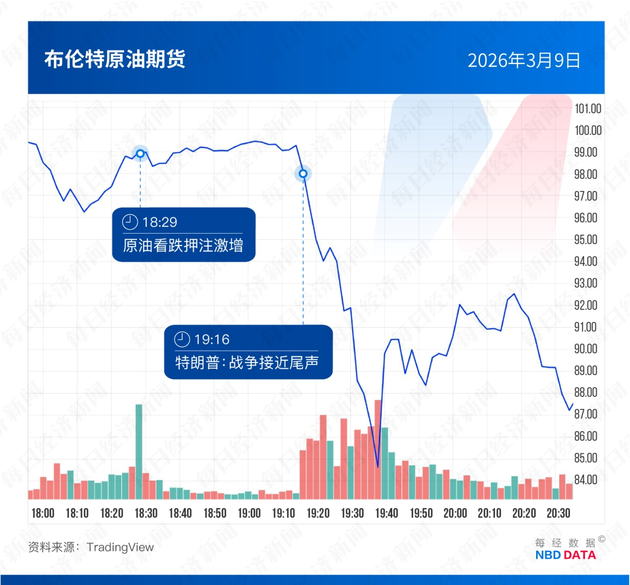
March 9, 2026: Approximately 47 minutes before Trump stated that the war was “nearly over,” about 8,000 Brent crude contracts were sold, involving roughly $790 million. Oil prices plunged 25% immediately after the statement.
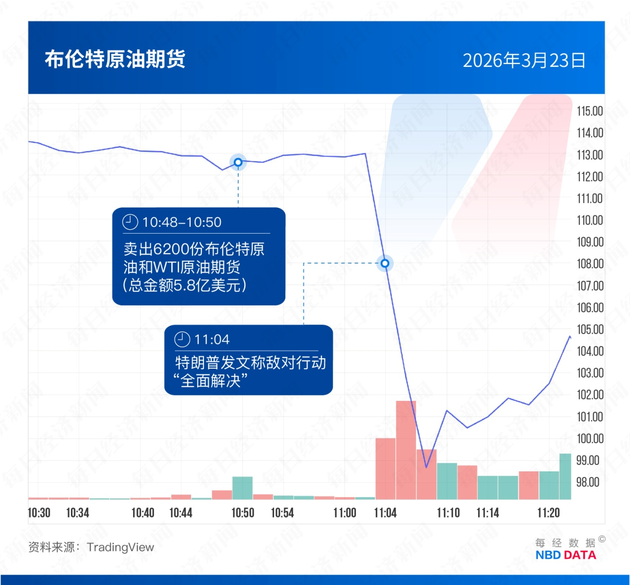
March 23, 2026: Around 15 minutes before Trump announced a delay in military action against Iran, roughly 6,200 Brent and WTI contracts were offloaded, totaling $580 million. Prices dropped 11% within minutes.
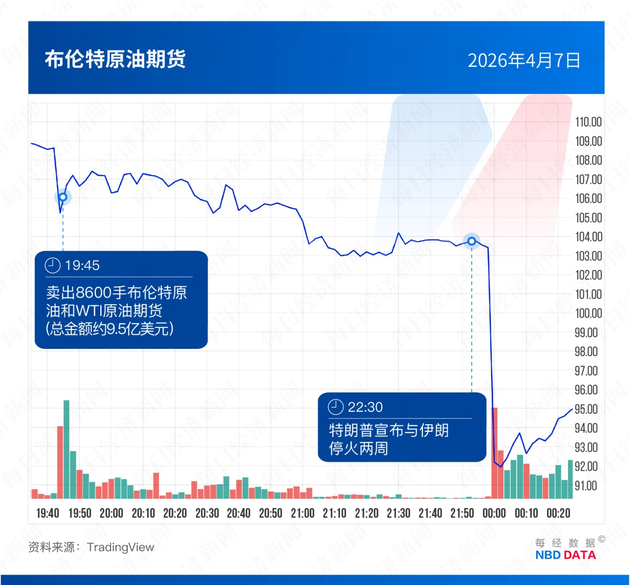
April 7, 2026: Nearly three hours before Trump declared a two-week ceasefire with Iran, about 8,600 contracts were sold, worth approximately $950 million. Oil prices fell 15% following the announcement.
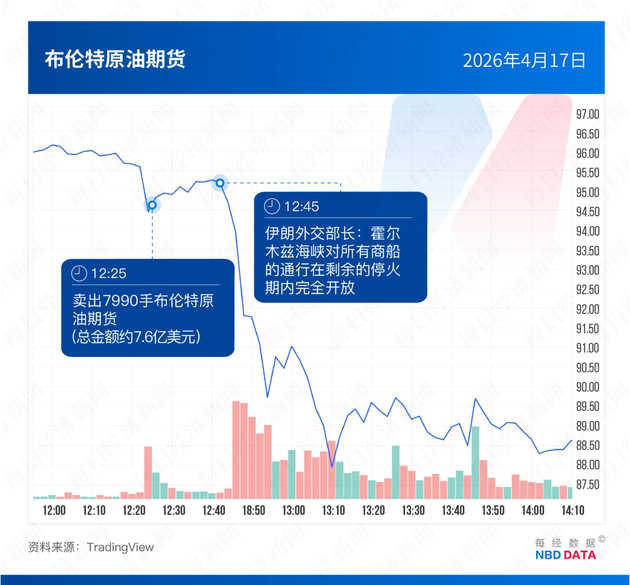
April 17, 2026: About 20 minutes prior to Iran’s announcement reopening the Strait of Hormuz to commercial shipping, nearly 7,990 Brent contracts were sold, valued at $760 million. Prices declined by 11%.
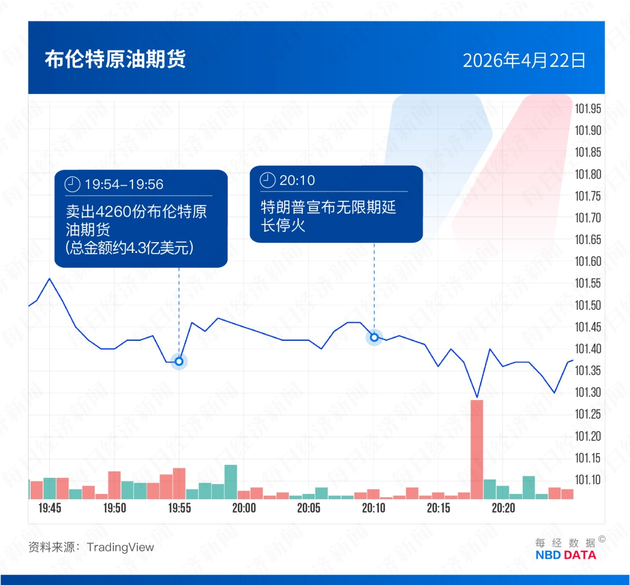
April 22, 2026: Fifteen minutes before Trump declared an indefinite extension of the ceasefire, 4,260 contracts were sold, totaling $430 million. Oil prices fell by 3.8% immediately afterward.
Mounting Calls for Investigation
The pattern has prompted calls for investigation from prominent U.S. policymakers. Representative Ritchie Torres described the activity as potentially “one of the largest insider trading scandals in history.” Senator Elizabeth Warren and Senator Sheldon Whitehouse have also urged regulators to act.
Representative Steven Horsford stated bluntly that “this is not a coincidence, but a pattern,” suggesting that only individuals with access to government information could have executed such well-timed trades.
Nobel laureate economist Paul Krugman went further, arguing that someone close to Trump may have exploited advance knowledge of policy decisions for profit, calling such actions “tantamount to treason.”
In response, Commodity Futures Trading Commission (CFTC) Chairman Michael Selig announced on April 16 that the agency is actively investigating suspicious oil futures transactions, warning that any fraudulent or manipulative behavior will be prosecuted.
According to Wang Yongzhong, professor with the Institute of International Politics and Economics, Chinese Academy of Social Sciences, such practices undermine the fundamental principle of fair pricing in commodity markets. When certain participants gain early access to market-moving information, it creates structural information asymmetry, allowing them to profit at the expense of ordinary investors.
He warned that insider information could circulate among government officials, advisors, interest groups, or politically connected donors, distorting not only oil futures pricing but also broader financial markets.

Photo/AIGC
A Potential Legal Breakthrough
Historically, the U.S. has not pursued criminal cases specifically targeting the use of confidential government information in commodities trading. However, a recent case involving a U.S. Army soldier may mark a turning point.
Between December 2025 and January 2026, a U.S. Army soldier Gannon Ken Van Dyke allegedly used classified information related to a covert operation to capture Venezuelan President Nicolás Maduro. He placed bets on the prediction market Polymarket, wagering that Maduro would be removed from power, ultimately earning over $400,000.
On April 23, the U.S. Department of Justice charged Van Dyke with multiple offenses, including fraud and unlawful use of government information. The CFTC simultaneously filed a civil lawsuit, marking its first-ever case involving insider trading based on confidential government data in a prediction market.
Notably, regulators invoked the so-called “Eddie Murphy Rule”—a provision derived from the film Trading Places and codified under Section 746 of the Dodd-Frank Act. The rule prohibits government employees and affiliates from using non-public, market-sensitive information for personal gain or sharing it with others for trading purposes.
If Van Dyke is ultimately convicted, the case could establish a critical legal precedent, equipping regulators with stronger tools to pursue more complex and systemic abuses of government information in financial markets.


 川公网安备 51019002001991号