File photo/Zhang Jian (NBD)
John Howkins, John Howkins, the "father of the creative economy", recently shared his latest insights on urban transformation with National Business Daily (NBD).
Having shaped the UK’s strategic "top-level design" for creative industries in the late 1990s, Howkins now looks toward China—specifically Chengdu—as a vital frontier for this economic evolution.
Howkins defines the creative economy as a "massive trigger" for sustainable growth. In London, the sector now contributes over £50 billion annually, outperforming the broader economy. He argues that ambitious cities must shift from traditional, "scale-heavy" growth to a "paradigm shift" rooted in innovation and intellectual property (IP).
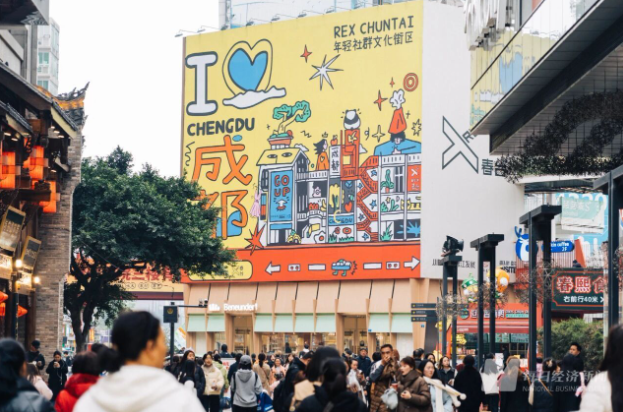
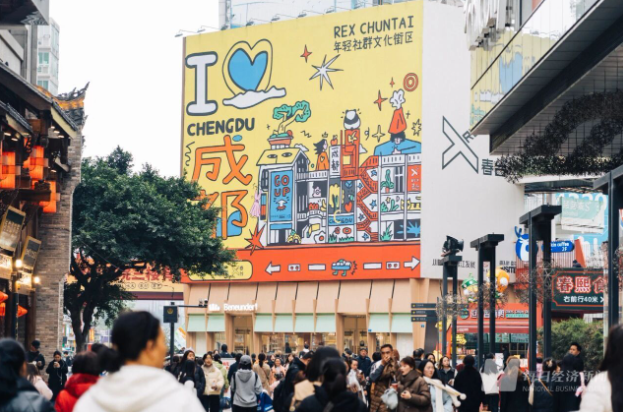
A frequent visitor to China since 1979, Howkins has witnessed the country's creative evolution firsthand. He identifies Chengdu as a standout city with immense potential.
File photo/Zhang Jian (NBD)
"Chengdu is an open, vibrant city," Howkins observed. "It possesses a unique combination of young talent, lower market costs, and a relatively mature policy framework." He pointed out that the city is already producing works and enterprises with global market influence, particularly in e-sports, gaming, and visual arts.
Howkins believes that to stay ahead in the global competition, cities like Chengdu must continue amplify and monetize creativity, provide superior living environments and cultural infrastructure and shift from linear growth (population/area) to a co-evolution of people and environment.
Cultivating a creative ecosystem is not an overnight task. "Creativity is a slow process," Howkins concluded, drawing a parallel to the great classical poets and painters. "Like all great works, the cultivation of creative industries requires time and patience."
As Chengdu enters its next phase of strategic planning, the insights from the "Father of the Creative Economy" serve as a reminder that the city’s future lies not just in its infrastructure, but in the boundless imagination of its people.


 川公网安备 51019002001991号