From June 23 to 25, 2026, the World Economic Forum’s 17th Annual Meeting of the New Champions, also known as Summer Davos 2026, was held in Dalian, a coastal city in Northeast China’s Liaoning Province. During the meeting, the World Economic Forum and Marsh, a global insurance broking and risk advisory leader, jointly released a report titled The Longevity Dividend: The Business Case for Linking Health and Wealth.
The report notes that by 2040, the global population aged 65 and above will increase by about 53% from 2025 levels, while the traditional working-age population will grow by only 13%. In China, the growth of the older population, the rising burden of chronic diseases, and mounting pressure on retirement protection, healthcare and care services are posing new tests for families, businesses and public systems.
How, then, can longevity be transformed from a social cost into an engine of domestic demand and productivity growth in China? As delayed retirement arrives alongside the longevity era, how should companies better unlock the second-stage value of older workers?
To discuss these questions, National Business Daily, or NBD, spoke with Catherine Li, CEO of Marsh McLennan China and president of Mercer China. Li said China’s future economic resilience will increasingly depend on whether longer lives are also healthier and better lives. The key to unlocking the longevity dividend, she said, lies in whether people can maintain health, financial resilience and productive participation across a longer life course.
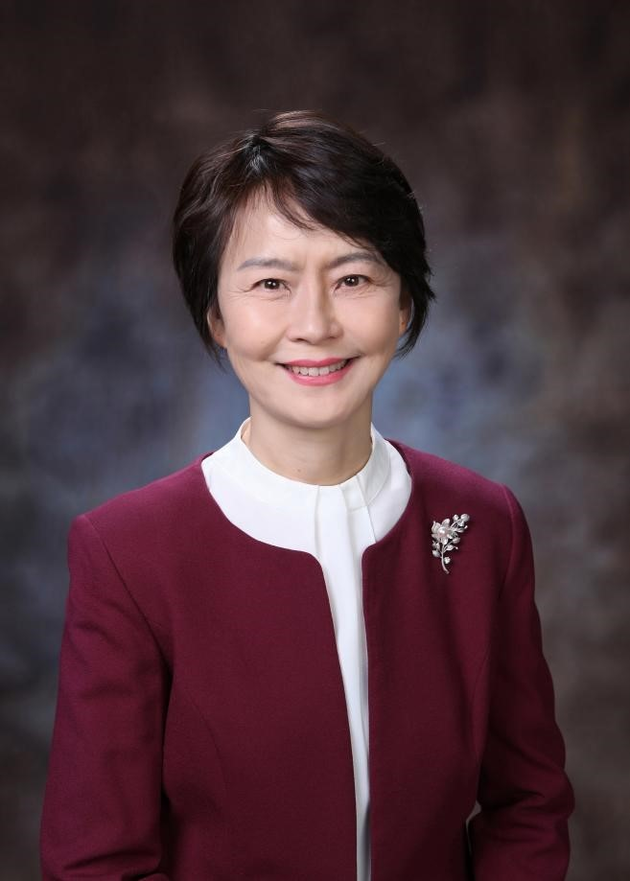
Catherine Li Photo/provided to NBD
Unlocking the longevity dividend depends on living longer and better
NBD: Why is longevity no longer just an ageing issue, but a broader economic and social challenge?
Catherine Li: Longevity is not simply about ageing; it is about the interaction between health and wealth across the full life course. Longer life affects not only retirees, but also younger workers, caregivers, employers, and public systems. In that sense, it is a whole-of-society challenge rather than a narrow demographic issue.
For China, this matters because the report shows that the country’s older population will rise sharply through 2040, while the growth of the traditional working-age population will not keep pace. That changes the balance between labor supply, care demand, healthcare costs, and retirement protection.
The deeper challenge is that lifespan has outgrown healthspan. If people live longer but spend more years in poor health, the costs appear everywhere: in medical spending, family caregiving, labor participation, productivity, and household financial resilience.
NBD: For China, how will longer life expectancy, a higher chronic disease burden, and pressure on healthcare, care services and retirement protection affect future economic resilience and long-term growth?
Catherine Li: The report makes clear that China’s economic resilience will increasingly depend on whether longer lives are also healthier lives. If chronic disease rises while the population ages, China faces higher healthcare expenditure, more family caregiving pressure, and more workers leaving or reducing participation in the labor market.
The China data in the report is especially striking on diabetes prevention. By increasing moderate physical activity, China could prevent more than 3.2 million new type 2 diabetes cases by 2040 and gain more than 16 million healthy life years. That shows how prevention can directly strengthen long-term productivity and reduce future strain on health systems.
The same logic applies to retirement adequacy and household resilience. When health costs rise and caregiving burdens increase, families have less capacity to save, consume, and invest in the future. So the challenge is not only fiscal pressure on the state; it is also pressure on the financial resilience of households, which ultimately affects broader economic growth.
NBD: How can longevity be transformed from a social cost into an engine of domestic demand and productivity growth in China? Compared with mature markets in Europe and the United States, what are China’s opportunities and risks in unlocking the longevity dividend?
Catherine Li: Longevity becomes a dividend when investment in health supports financial resilience and productive participation. In practical terms, if people stay healthier for longer, they can work longer if they choose, consume more confidently, rely less on acute care, and contribute more to the economy.
China has some of the largest quantified upside in the report. For example, simple home modifications to prevent falls could generate around 1.078 trillion U.S. dollars in cumulative financial benefit in China by 2040. That is a strong example of how relatively low-tech prevention can create both health gains and economic returns.
Compared with mature Western markets, China’s opportunity is that it still has a window to act earlier in the transition. The risk is that it has less time to adapt. If China invests early in prevention, age-friendly housing, workforce redesign and healthy ageing, it can unlock domestic demand and productivity. If the response is too slow, longevity may be felt mainly as a cost shock through healthcare, caregiving and retirement pressure.
Older talent should be seen as an economic asset, not a legacy workforce issue
NBD: China is facing labor structure transformation, and delayed retirement is arriving together with the longevity era. How should companies better develop the “second value” of silver talent? What practices can the insurance industry share in attracting and retaining older employees?
Catherine Li: The longevity report is very clear that ageism creates economic loss, while multigenerational workforces create value. Older workers contribute experience, judgment, mentoring, and stability. So the real issue is not whether senior talent still has value, but whether companies redesign roles and career paths to capture that value.
The People Risk deck strengthens this point because China already ranks inadequate leadership skills among its major people risks. That means retaining experienced talent is not only a diversity issue or a social issue; it is a direct business response to capability gaps and talent scarcity.
For employers, especially in insurance and professional services, the practical answer is flexible and skills-based talent management. This includes phased retirement, reskilling, mentoring roles, project-based expert positions, and health-supportive work design. In our industry, experienced employees often create disproportionate value through client relationships, advisory judgment, risk insight, and talent development.
NBD: A longevity society means career spans may become longer, while AI keeps raising skill requirements. How should companies activate older employees so that existing talent becomes incremental talent?
Catherine Li: The longevity report argues that older talent should be seen as an economic asset, not a legacy workforce issue. Longer careers will only be sustainable if companies continue to invest in employability, including skills renewal, health support, and flexible work design.
The People Risk deck adds a practical business rationale in China: labor shortages, leadership gaps, and rising people-related costs are already major concerns. That means companies cannot afford to underuse experienced employees, especially when they already understand the business, clients, and operating environment.
To convert stock into increment, companies need to support older workers with reskilling, AI-assisted productivity, role redesign, and recognition of nontraditional value. That includes mentoring, coaching, specialist advisory work, project leadership, and institutional knowledge transfer—areas where experienced employees often outperform.
NBD: When basic work is increasingly taken over by AI, how should companies train young people in the future? Where will the talent pipeline come from?
Catherine Li: The talent pipeline will need to become much more intentional. If AI takes over more routine or entry-level tasks, companies can no longer assume that junior talent will naturally develop through repetition. They will need to create structured pathways through apprenticeships, rotations, mentoring, and supervised use of AI in real work settings.
This challenge is directly connected to the deck’s findings on technology skills shortages, labor shortages, and inadequate leadership skills. If companies do not redesign early-career development now, they risk weakening the future pipeline of managers, specialists, and leaders.
The future entry-level advantage will be less about doing routine tasks and more about learning agility, judgment, communication, and the ability to work with AI. Companies will need to train younger employees not just to use tools, but to question outputs, interpret context, and make responsible decisions.
AI can help relieve labor pressure, with the core value in augmenting people
NBD: To what extent can large-scale AI adoption help relieve China’s future labor structure pressures?
Catherine Li: AI can help relieve labor pressure, but mainly by augmenting human work rather than replacing the workforce outright. In Asia and Global, the People Risk deck shows that labor shortages are already one of the top people risks, so AI has real value where it improves productivity, reduces routine workload, and helps people do more with the same headcount.
At the same time, the deck also shows that China is concerned about mindset barriers to AI adoption. That is important because the benefits of AI will not come automatically from deploying the technology. They depend on whether organizations have the confidence, skills, governance, and leadership alignment to use it effectively.
So AI can be a meaningful part of the solution to demographic and workforce pressure, but not the whole solution. It must be combined with reskilling, better job design, stronger leadership, and more resilient workforce planning.
NBD: Many companies are talking about AI for cost reduction and efficiency. In your observation, what is the biggest obstacle to truly turning AI into productivity?
Catherine Li: The biggest obstacle is organizational capability, not just technology access. The People Risk findings point to concerns such as limited technology team capacity, inadequate employee training and upskilling, and lack of AI knowledge in HR. In other words, many companies are trying to scale AI before building the internal foundations needed to use it productively.
A second obstacle is leadership and mindset. The deck identifies mindset barriers to AI adoption as a common risk. In practice, this often means fear of change, unrealistic expectations, weak change management, or a failure to embed AI into actual workflows and decisions.
A third obstacle is trust and risk control. The same deck shows China is highly focused on cyber literacy, mishandling of data and IP, and regulatory change. If companies are not confident in governance, privacy, and security, AI remains fragmented or underused rather than becoming true productivity.
NBD: In your view, how is AI mainly affecting job structures? Which roles are most likely to be reshaped, and which capabilities are becoming more important?
Catherine Li: AI is changing jobs at the task level before it changes them at the occupation level. The roles most likely to be reshaped are those with a high share of repeatable, rules-based, documentation-heavy, or coordination-heavy work. That includes parts of administrative, analytical, support, and some middle-management work.
The deck is particularly useful here because it explicitly highlights concern about the impact of AI on middle management roles, workflows, and leadership development. That suggests organizations are starting to recognize that AI will not only affect junior roles, but also the structure of supervision, reporting, and decision support.
As this happens, the most valuable capabilities become the ones AI cannot easily commoditize: critical thinking, judgment, ethics, leadership, collaboration, communication, and adaptability. Digital literacy remains important, but increasingly the differentiator is how well people combine human judgment with machine capability.


 川公网安备 51019002001991号