SpaceX has made one of the biggest debuts in Wall Street history, with demand for its shares far outstripping supply. Yet beneath the excitement surrounding Elon Musk's latest public offering lies a growing debate over valuation, governance and financial sustainability.
The company listed on the Nasdaq on June 12 (U.S. time), raising about $75 billion at an IPO price of $135 per share, implying a market capitalization of roughly $1.77 trillion. Investor appetite has been overwhelming, with subscriptions reportedly exceeding $250 billion, including more than $100 billion from retail investors.
At the same time, several major index providers—including Nasdaq, MSCI and FTSE Russell—have adopted or applied accelerated inclusion rules that could allow SpaceX to join key indexes within days of its listing. Analysts estimate that index-tracking funds could be forced to buy as much as $35 billion worth of SpaceX shares shortly after the IPO.
However, while investors are racing to secure allocations, some institutional investors and well-known short sellers are urging caution, arguing that the company's ambitious vision is accompanied by substantial financial and governance risks.
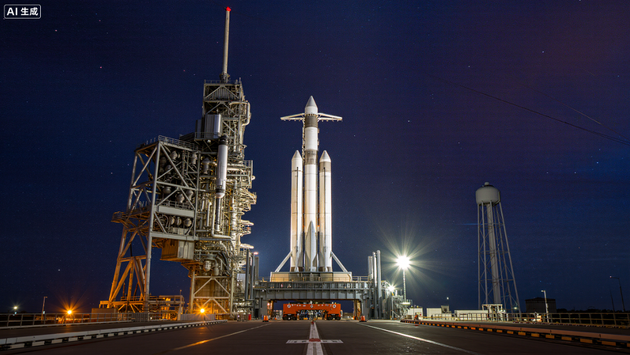
Photo/AIGC
A trillion-dollar vision meets financial reality
SpaceX's IPO prospectus paints an expansive picture of the future, highlighting opportunities ranging from satellite broadband and AI infrastructure to lunar development and even Mars colonization. The company estimates that the long-term addressable space economy could reach $28.5 trillion.
Many of these businesses remain years—or even decades—from commercialization.
Financially, the picture is far less optimistic.
The company's acquisition of xAI earlier this year significantly altered its financial profile. Before the deal, SpaceX's Starlink satellite internet business had emerged as its primary profit engine, generating operating income of $4.42 billion in 2025.
Following the merger, however, heavy spending on artificial intelligence and launch operations pushed the company into losses. SpaceX reported an operating loss of $2.59 billion in 2025, followed by another $1.94 billion loss in the first quarter of 2026. Total debt climbed to approximately $29 billion.
Mike Alves, founder and portfolio manager of VIDA Vision Fund and an early SpaceX investor, told National Business Daily that the company's long-term prospects ultimately depend on the success of Starship.
"Starship is the foundation for almost everything SpaceX hopes to achieve," Alves said. "If Starship succeeds, it unlocks enormous opportunities—from lunar missions and Mars exploration to expanding Starlink and eventually supporting orbital data centers."
Despite the risks, Alves believes investors should not underestimate Musk's ability to execute.
"There is a saying in the industry: never short Elon Musk," he said.
Fast-track index inclusion draws criticism
SpaceX's rapid entry into major equity indexes has also become controversial.
Earlier this year, Nasdaq introduced new rules allowing exceptionally large IPOs to join the Nasdaq-100 after just 15 trading days. FTSE Russell revised its U.S. index methodology to permit inclusion after as few as five trading days, while MSCI confirmed that SpaceX would qualify for inclusion under its existing rules after 10 trading days.
The changes have drawn criticism from some investment professionals, who argue that passive investors—including pension funds—will be required to buy shares regardless of valuation.
Owen Lamont, vice president at Acadian Asset Management, described the rule changes as forcing index investors to become "buyers of last resort."
George Noble, a former Fidelity fund manager, called the accelerated inclusion "shameless."
Because many of the world's largest pension funds track these indexes, billions of dollars could flow automatically into SpaceX after its listing.
Still, not every index provider has changed its standards.
The S&P 500 continues to require companies to be profitable in the most recent quarter and over the last four quarters combined under U.S. GAAP before becoming eligible for inclusion — a rule that once delayed Tesla's entry into the index for years.
Aeisha Mastagni, senior portfolio manager in the Chief Investment Officer's Office at the California State Teachers' Retirement System (CalSTRS), told National Business Daily that the pension fund supports the S&P's existing approach.
"We will not directly participate in the SpaceX IPO," Mastagni said. "However, if SpaceX is added to indexes tracked by our passive portfolios, we will be required to purchase the stock."
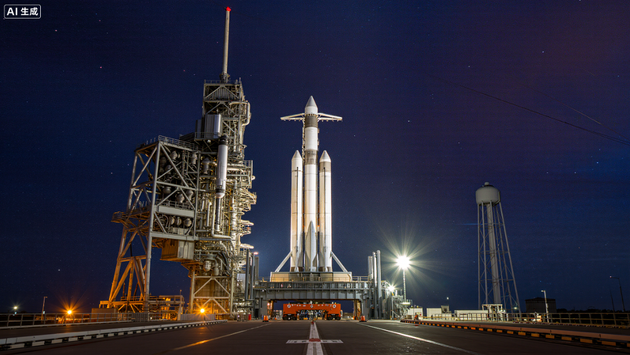
Photo/SpaceX website
Short sellers see significant downside
Not everyone is convinced that SpaceX deserves its lofty valuation.
David Trainer, CEO of investment research firm New Constructs, believes the stock is substantially overvalued.
"I think SpaceX is overpriced and extremely risky. Investors should avoid it," Trainer told National Business Daily.
According to his estimates, SpaceX would need to increase annual revenue from roughly $19 billion in 2025 to more than $1.1 trillion by 2035 in order to generate returns that justify its IPO valuation—requiring annual revenue growth of roughly 50% for a decade.
Trainer estimates the company's intrinsic value at around $500 billion, implying potential downside of more than 70%.
Veteran short seller James Chanos also questioned the valuation, describing the IPO as driven largely by expectations rather than current financial performance.
Five key concerns raised by critics
Analysts skeptical of the IPO generally point to five major risks:
1. Valuation far exceeds current fundamentals
Critics argue that SpaceX's revenue, profitability and cash flow remain insufficient to support its multi-trillion-dollar valuation.
2. IPO proceeds may largely go toward debt repayment
A significant portion of the funds raised is expected to be used to repay bridge financing and meet obligations related to previous acquisitions and infrastructure commitments, rather than funding future growth initiatives— including bridge financing for prior acquisitions, GPU lease guarantees, and spectrum purchase obligations.
3. Additional fundraising may be necessary
Given the enormous capital required for AI infrastructure, satellite deployment and Starship development, analysts warn that SpaceX could seek additional financing in coming years, potentially diluting existing shareholders.
4. Profitability remains uncertain amid fierce competition
SpaceX faces competition across launch services, satellite communications and AI infrastructure. Some analysts argue that its returns on invested capital currently lag those of industry peers.
5. Corporate governance concerns
Perhaps the most persistent criticism centers on governance.
Through the company's dual-class share structure, Musk retains overwhelming voting control, while critics note the absence of independent board oversight in several key areas. Some institutional investors argue that minority shareholders will have little influence over major corporate decisions.
Harvard Law School professor Lucian Bebchuk has previously argued that such governance structures leave outside investors with limited protections against decisions that primarily benefit controlling shareholders.
A defining test for public markets
SpaceX's IPO represents far more than another blockbuster technology listing.
For supporters, it offers a rare opportunity to invest in one of the world's most ambitious companies as it seeks to reshape space exploration, global connectivity and artificial intelligence.
For skeptics, it is an expensive bet on a vision whose financial returns remain uncertain.
Whether SpaceX ultimately becomes the next transformational public company—or a cautionary tale about market optimism—may depend not only on Musk's execution, but also on whether investors continue to believe that tomorrow's possibilities justify today's price.
*This article is for informational purposes only and does not constitute investment advice.


 川公网安备 51019002001991号