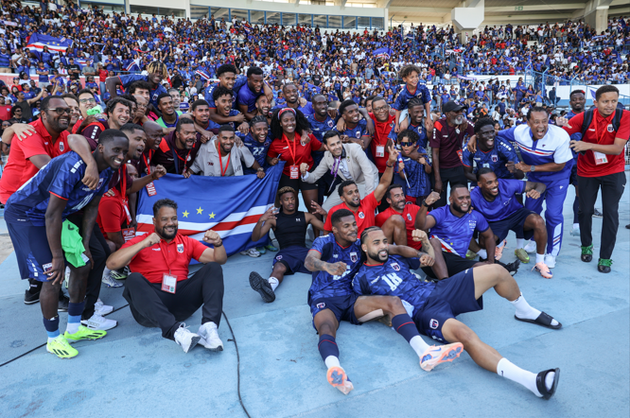
At 00:00 Beijing time on June 16, 2026, the African island nation of Cabo Verde will step onto the World Cup finals stage for the very first time. Nicknamed the "Blue Sharks," Cabo Verde's men's football team will go directly up against tournament favorites Spain.
"Right now, the World Cup atmosphere in Cabo Verde is incredibly strong," Kong Qingqing, a teacher at the Confucius Institute at the University of Cabo Verde, told the National Business Daily.
She noted that a large screen has been set up in a downtown square in the capital, Praia, with spectator seating prepared for the live broadcast of Cabo Verde's opening match.
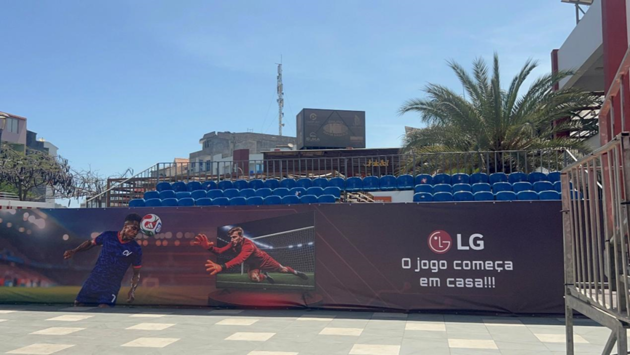
World Cup live broadcast stands set up in front of the big screen. Photo/Kong Qingqing
With a population of just 546,000, scattered across 10 volcanic islands, this nation overcame limited resources and fragmented geography to break through fierce competition in African qualifying, creating a milestone in its sporting history.
What is little known is that behind this legendary lies over half a century of deep cooperation between China and Cabo Verde. From infrastructure to economic ties and cultural exchanges, Chinese-built infrastructure and cooperation projects are helping support the development of this Atlantic island nation.
A "Team of Expatriates" Drives Football Breakthrough for a Nation of 546,000
"I hope this World Cup journey will open new doors for young people, and I hope more people from around the world will come and discover our country," said Cabo Verde captain Ryan Mendes.
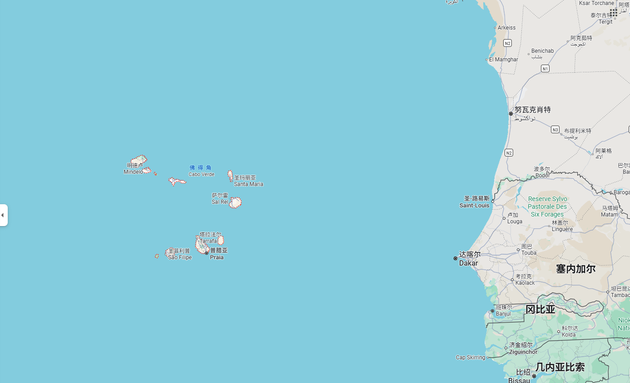
Located in the central North Atlantic, 570 kilometers off the African continent, Cabo Verde sits at the crossroads of sea routes connecting the Americas, Africa, and Europe, and has long been known as the "crossroads connecting the continents." Yet on the world football map, it long remained on the periphery.
The Cabo Verdean Football Federation was established in 1982, joined FIFA in 1986, and only entered its first World Cup qualifying campaign in 2000. During the 2014 qualifiers, the team was disqualified for fielding an ineligible player.
The turning point came in the 2025 qualifiers: on October 14, Cabo Verde defeated Eswatini 3-0 at home to top its group and qualify for the World Cup finals tournament.
Ranked 69th by FIFA with a total squad market value of €52 million, what exactly enabled Cabo Verde's breakthrough?
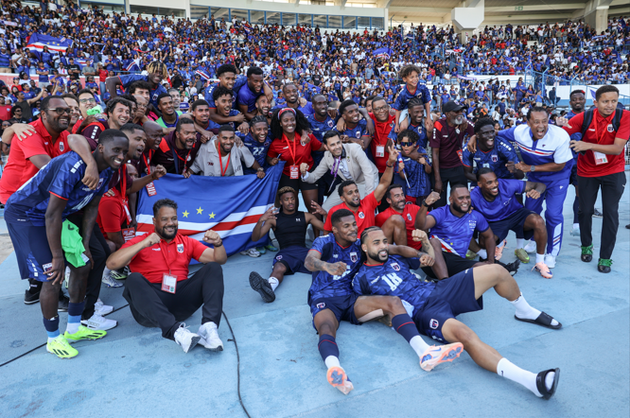
On May 31, 2026 local time, Lisbon, Portugal, the 2026 international friendly match between Cabo Verde and Serbia. Photo/VCG
A former Portuguese colony, Cabo Verde only gained independence in 1975. Scarce in natural resources and with limited arable land, the country has long depended on fishing, tourism, and overseas remittances. Its GDP stands at $2.92 billion, with a GDP per capita of $5,670.
Despite its limited national strength, Cabo Verde enjoys social stability and a relatively high level of education, providing fertile ground for sports development. As the most popular sport, football gradually became an important symbol of cohesion for this young nation.
Although Cabo Verde's native population is small—just 546,000—a large diaspora is scattered overseas due to historical waves of emigration. Drawing on this history, the Cabo Verdean Football Federation launched a campaign to recruit overseas players of Cabo Verdean heritage.
For this World Cup qualifying campaign, the main squad features multiple players holding dual citizenship, predominantly Portuguese. All 25 players come from leagues abroad, and 14 were born overseas.
For years, Cabo Verde has been an overseas "talent pool" for Portuguese football. Cristiano Ronaldo's family traces part of its roots to Cabo Verde, and stars like Nani and Nélson Semedo all have Cabo Verdean heritage. These expatriates, nurtured in European youth academies, form the solid core of the "Blue Sharks."
A Chinese-Built Stadium Fills a Gap, Supporting "Blue Sharks" to Realize Their Dream
Cabo Verde's World Cup debut coincides with the 50th anniversary of diplomatic relations between China and Cabo Verde. The crucial qualifier that sealed Cabo Verde's place in the World Cup was played at the Chinese-built Estádio Nacional de Cabo Verde in Praia.
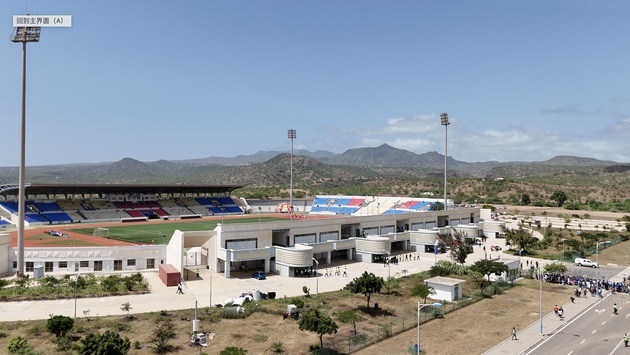
Cabo Verde' National Stadium. Photo/Kong Qingqing
Formally handed over to Cabo Verde in 2013, the stadium covers 94,000 square meters and seats 15,000 people, giving the country its first international-standard sports venue following the country's independence.
Then-Prime Minister José Maria Neves once remarked, "This is a dream China helped us realize," calling the national stadium "one of the largest projects since Cabo Verde's independence."
Kong Qingqing, a state-sponsored teacher at the Confucius Institute at the University of Cabo Verde who has lived and worked in the country for eight years, witnessed the entire journey of the national team charging into the World Cup.
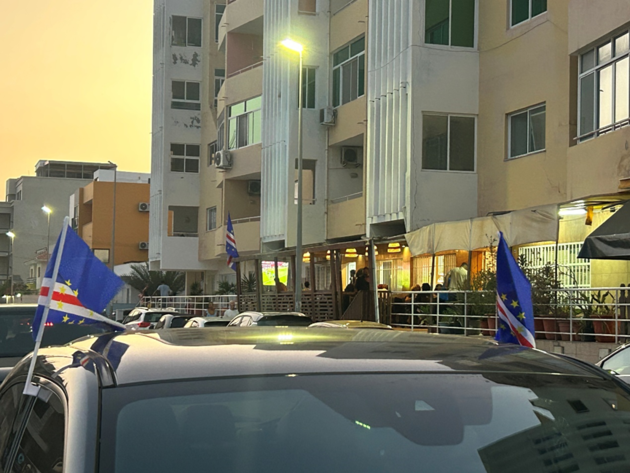
A live World Cup match is being broadcast in Cabo Verde's bar. Photo/Kong Qingqing
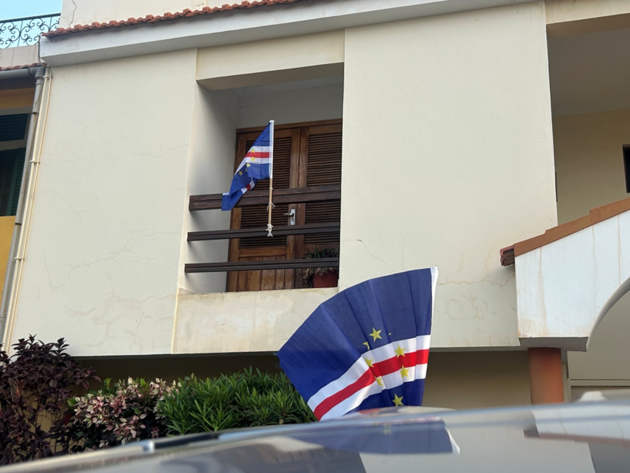
Cabo Verde's National flags are everywhere: along streets and lanes, on car roofs, and from residential balconies. Photo/ Kong Qingqing
Kong recounted that on the night they qualified, and in the days since, talk of football in schools and communities across Cabo Verde shifted from European clubs to the national team. People proudly share the development stories of national team players. "We're going to the World Cup" quickly became the phrase heard everywhere.
"This stadium has a very high utilization rate. Especially when the national team plays, local people's enthusiasm is tremendous. It carries countless sporting memories for the local population," she said.
"The World Cup atmosphere here right now is very strong. National flags are everywhere—on the streets, on car roofs, on residents' balconies. Every bar is broadcasting World Cup matches live. The downtown Praia square has even set up a dedicated viewing area for the opening match so people can gather and cheer together," Kong described to NBD.
Ma Hanzhi, assistant research fellow at Department for Developing Countries Studies, China Institute of International Studies, told NBD that the Cabo Verde' National Stadium is a landmark project of national significance for Cabo Verde. Since its delivery, Chinese technical support has continued uninterrupted since the stadium was handed over.
In April 2025, the third phase of technical assistance began, with 11 Chinese experts set to work here for three years. "This stadium is Cabo Verde's first, and currently largest, comprehensive national sports facility since independence. It is not only the exclusive home ground of the men's national team but also a core platform for local people to engage in sports, cultural, and political activities."
Zhao Jun, an associate professor at Shanghai International Studies University's Middle East Studies Institute and executive director of the African Arab Countries Research Program, further noted, "The National Stadium has given Cabo Verde the capacity to host continental football events. It hosted the crucial World Cup qualifying matches and helped the national team achieve its historic qualification. As the national team's home, the stadium has helped ignite enthusiasm for football and strengthen national pride."
Beyond the stadium, China has also aided Cabo Verde with the National Assembly building, the government building, the Poilão Dam, and multiple other projects. This infrastructure has long been woven into the daily lives of local residents.
Kong summed up the characteristics of Chinese-assisted projects in six words: "highly visible and widely used." "The national auditorium hosts Chinese Spring Festival galas; the Praia Central Hospital serves as the national medical center."
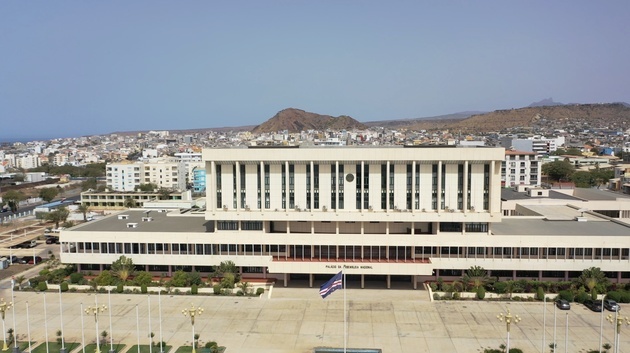
National Assembly building of Cabo Verde. Photo/Kong Qingqing
Zhao Jun pointed out that such projects reflect the principle of "sincerity, real results, amity and good faith" guiding China-Africa cooperation. "They are not just physical constructions but also carry multiple functions of technology transfer, job creation, and livelihood improvement—a vivid practice of the China-Africa community with a shared future."
Ma Hanzhi added, "China's infrastructure cooperation with Africa has four major characteristics: first, projects are generally low-cost, high-quality, and completed on time; second, project construction is closely integrated with technical assistance and talent cultivation, emphasizing skills transfer and local capacity-building; third, emphasis is placed on closely linking infrastructure with industrial development to maximize its driving effect; fourth, the focus is on benefiting people's livelihoods and enhancing their sense of gain and happiness."
Football, Chinese Language, and Three-Wheelers: Chinese Presence Throughout Cabo Verde's Story
Since the first group of overseas Chinese arrived in Cabo Verde in 1987, the Chinese community has gradually built up a business base over more than three decades. From just a handful initially to about 1,000 today, the Chinese community has expanded from early restaurant ventures to enterprises, large and small shops, and malls spread across various islands, building a stable commercial presence.
Today, they are mainly engaged in commerce, retail, and catering, along with engineering technicians, company employees, aid workers, and educators.
Backpacker Xiao Li (a pseudonym) remarked to NBD, "On every remote island and in every remote town on those islands, you can find a Chinese-run general store."
During her travels, Xiao Li also got to know a Chinese restaurant owner who has been in Cabo Verde for over a decade, specifically catering to seafarers, and happened to encounter two Chinese fishing vessels that had been fishing off Sierra Leone for six or seven years and were passing through.
Another tourist, Wendy (a pseudonym), met several Chinese people running small department stores, one of whom had settled there more than two decades ago. "Chinese-made three-wheelers are everywhere here. You can even hear the familiar Chinese-language reverse warning message. on the streets," she added.
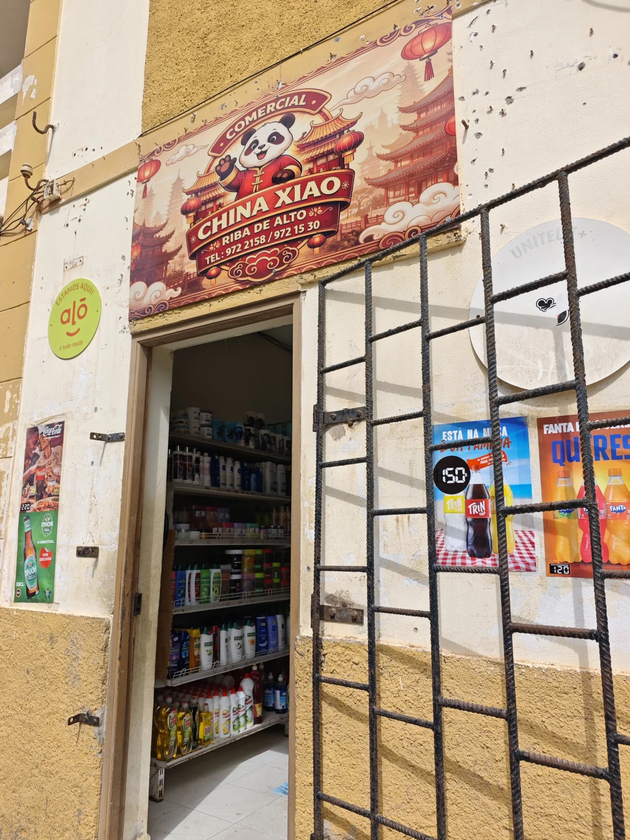
A Chinese-run department store. Photo/Wendy
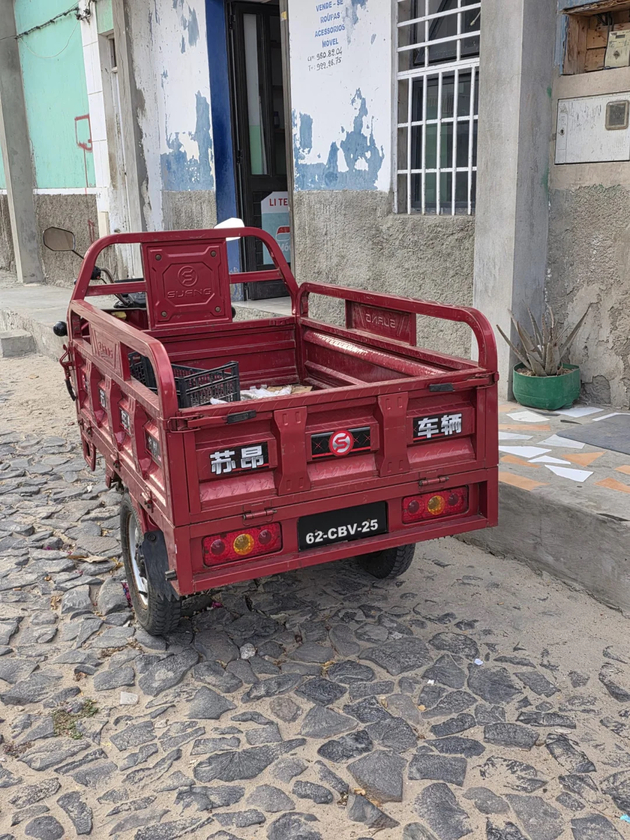
Chinese-made tricycles on the streets of Cabo Verde. Photo/Wendy
Kong Qingqing noted that some Chinese merchants are able to communicate not only in Portuguese but also in Cabo Verdean Creole, interacting very naturally with local customers.
In 2025, bilateral trade between China and Cabo Verde reached $116 million, a year-on-year increase of 2.7%. Due to the vast geographical distance and Cabo Verde's small market size, bilateral trade is conducted primarily through small-scale transactions settled in foreign exchange.
In recent years, China's main exports to Cabo Verde have included categories such as machinery, tools, electronic materials and components, base metals and their products, and products made from plaster, cement, asbestos, mica, and similar materials, as well as vegetable products.
Synchronized with warming economic and trade ties, deeper language and cultural exchanges are also underway.
Kong Qingqing observed that Chinese has evolved from a hobby into a valuable professional skill to a valuable language skill. "At the beginning, many students learned Chinese primarily out of curiosity or a wish to understand Chinese culture.
Now, a growing number see Chinese as a tool for future development, hoping to gain study opportunities in China or pursue China-related work," she said.
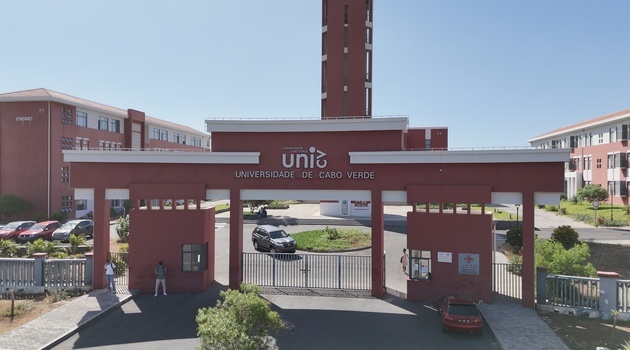
The University of Cabo Verde (its new campus is also a Chinese-aided project). Photo/ Kong Qingqing
Kong recalled that locals' impressions of China were mostly confined to vague notions like "China is far away" or "Made in China." Now, with the frequent use of these landmark buildings and a dazzling array of Chinese goods brought by companies and shops, people's understanding of China has become more comprehensive and multifaceted.
"Nowadays, many young people proactively ask about Chinese universities, China's technological development, high-speed rail, and artificial intelligence," she said.
One Confucius Institute student, Eliane Monteiro Moniz (Chinese name "Lan Xin"), first encountered Chinese in an interest class at the Institute at age 17 and developed a strong fascination.
At 20, she enrolled in the Chinese Language major at the University of Cabo Verde. At 23, she went to Guangdong University of Foreign Studies for a half-year exchange. Upon graduation at 24, she began working at the Chinese Embassy in Cabo Verde. Her life trajectory was changed by learning Chinese.
Ma Hanzhi believes that while hard infrastructure is the foundation of cooperation, people-to-people exchange is the "lubricant and catalyst." "The two must advance in tandem to truly achieve sustainable development," he stated.
During the World Cup matches, communities, bars, and schools across Cabo Verde are holding group viewing events. Kong Qingqing said she will take part as well. In her view, football is not just entertainment but also an important way to integrate into society. Living there for many years, she has frequently witnessed Chinese and locals bonding over football.
"This kind of emotional connection created through sport reflects the genuine friendship between the Chinese and Cabo Verdean people."


 川公网安备 51019002001991号