Three years later, Apple CEO Tim Cook has once again appeared in Chengdu.
In recent years, Cook has made frequent visits to China. In 2023, he traveled to Chengdu, took a night cruise on the Jin River, photographed Anshun Bridge, and later attended a Honor of Kings esports match at Apple’s flagship store in Chengdu Taikoo Li. He also specifically mentioned Chengdu—the birthplace of the game—on social media.
This time, however, was clearly different. On March 18, at the same Apple flagship store in Chengdu Taikoo Li, Cook attended Apple’s 50th anniversary commemorative event. To mark its half-century milestone, Apple selected 10 cities worldwide—including Shanghai, Tokyo, and Paris—all global hubs of influence.
After the first stop in New York concluded last Friday, Chengdu became the first stop in the Asia-Pacific region, underscoring Apple’s strategic attention to the city.
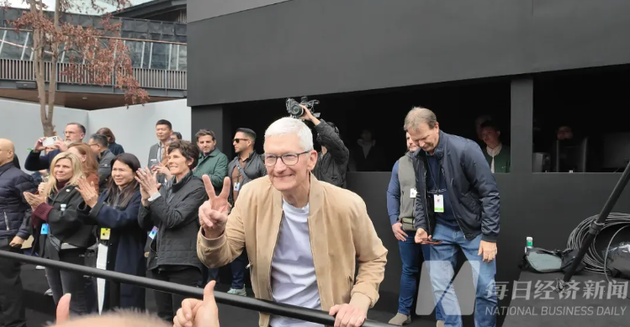
Photo/Yang Qifei (NBD)
Why Chengdu?
This question was repeatedly raised by attending media and bloggers. At a small meet-and-greet session, Cook responded:
“Chengdu is one of the most dynamic places in the world, full of innovation, full of entrepreneurial spirit, and full of a sense of ease.”
As Apple representatives explained, selecting a city is also a form of brand expression.
One tech blogger noted that this was one of the rare Apple events held outdoors, with the giant Apple logo wall of the flagship store serving as the stage backdrop. After 50 years of technological evolution, Apple’s narrative of innovation is now extending into the urban landscape of Chengdu.
A Fresh Choice
Chengdu Taikoo Li is undoubtedly one of the city’s key consumption hubs and a leading lifestyle landmark.
Continuously opening new stores reflects an ongoing cycle of brand renewal and reinforces Chengdu’s position as a magnet for flagship store debuts.
Walking through this showcase of global brands, with crowds queuing and live music from the central square, it becomes clear that Apple—the technology company—is the true focal point of the event.
From any perspective, Apple’s decision to host the second stop of its 50th anniversary showcase in Chengdu is both distinctive and significant.
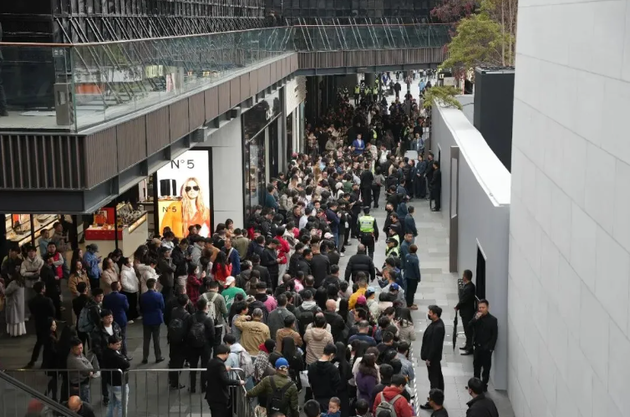
Apple’s transformation is widely recognized. Many observers note that in recent years Cook has frequently visited China, appearing not only in multiple cities but also across influencer and social media channels. Apple has also launched an official Xiaohongshu account. These moves reflect a broader shift in Apple’s China strategy—from demonstrating technological superiority toward building emotional connectivity.
In Cook’s global open letter marking Apple’s 50th anniversary, he emphasized co-creation:
“Every innovation we make is only a beginning—the most exciting chapters are written by you.”
In this sense, Chengdu’s openness to culture and leadership in consumer trends align closely with Apple’s evolving positioning.
Rewinding to 2015, three years after Apple opened its first Chinese mainland flagship store in Chengdu’s MixC, a standalone flagship store opened in Taikoo Li as the district gradually took shape.
At the time, Apple’s choice of Chengdu was considered “fresh.” It added a technological dimension to the fashionable district. The combination of a massive glass curtain wall and concrete structure also visually reflected the emerging minimalist architectural trend.
Today, Chengdu Taikoo Li has become a global benchmark for commercial districts. The broader Chunxi Road business area now hosts nearly 2,000 international brands and more than 600 first stores in China, ranking among the country’s leaders in product launch frequency, media reach, and consumer conversion efficiency.
As emerging technology devices gain popularity, consumer culture has increasingly expanded into technology-driven consumption. This closer integration between Chengdu and Apple provides a new stage for exploring the intersection of technology and lifestyle branding.
At the event, attendees included not only technology journalists and Apple fans, but also fashion and sports influencers, giving the gathering a cross-industry character.
“Culture” was another frequently mentioned keyword. One IT journalist observed that Apple often describes itself as standing at the intersection of technology and the humanities—and Chengdu, with its cultural depth and technological identity, aligns closely with that positioning.
Looking back at Cook’s 2023 visit, he highlighted how Apple products capture cultural and urban landscapes, while also engaging with gaming communities—signaling Apple’s intent to connect diverse cultural spheres in Chengdu.
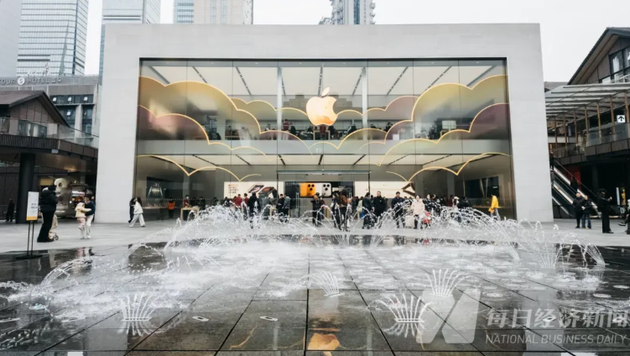
File photo/Zhang Jian (NBD)
A Pivotal Moment
The timing of this event is also worth closer examination.
Although the atmosphere carried a fan-oriented, community-style tone, many tech bloggers still focused on Apple’s AI strategy. When asked about Apple’s 50-year outlook, they repeatedly raised questions:
“What areas will Apple advance in AI?”
“When will Apple localize AI deployment in the Chinese mainland?”
The next wave of AI competition has become an unavoidable question for Apple. On one hand, criticism persists that Apple’s AI development is overly cautious or even lagging. On the other hand, in China, AI-driven products—from smart vehicles and smart glasses to humanoid robots—are increasingly seen as approaching their own “iPhone moment.”
This inevitably recalls the peak of iPhone-era innovation. Twenty years ago, Steve Jobs unveiled the first iPhone, a device that eliminated the traditional physical keyboard and introduced full touchscreen interaction, redefining mobile phones. It was widely described as Apple “reinventing the phone.” Since then, breakthrough products have often been referred to as an “iPhone moment.”
However, a series of developments is quietly reshaping the narrative.
Since early this month, “lobster farming” has become a viral phenomenon in China, seen as a symbolic moment for AI moving into real-world applications. The once-niche Mac mini has also become a highly sought-after “must-have” in the compute market, with demand far exceeding supply. Industry observers note that AI development may drive a new wave of growth across terminal devices.
The next phase of AI competition will be centered on end devices. Recently, Apple launched the new entry-level MacBook Neo, priced below 4,000 yuan, breaking the long-standing premium pricing barrier of its Mac lineup. Some analysts view this as Apple’s attempt—leveraging its in-house chip advantage—to reassert control over device-level pricing power.
At this pivotal moment, Apple is drawing global attention to Chengdu. In parallel, Chengdu is advancing a comprehensive strategy to capture the next wave of terminal-device innovation.
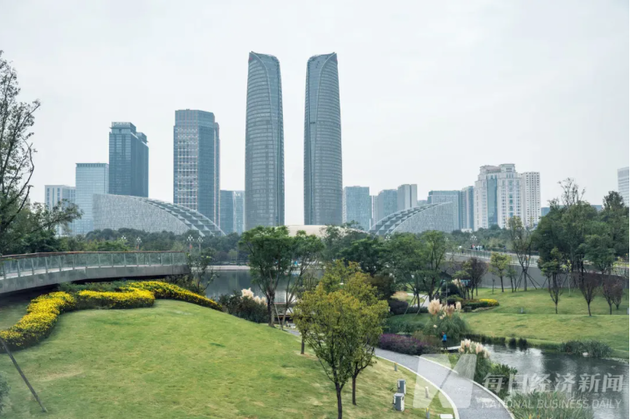
Earlier this year, Chengdu launched a manufacturing initiative focused on “increasing product variety, improving quality, and building brands,” aiming to enhance the national visibility of local companies, secure orders, and expand market reach—transforming supporting manufacturers into flagship and breakout products.
This reflects not only a rapid response to technological transformation, but also a structural reshaping of urban industrial strategy. Analysts point out that unlike traditional scale-driven industrial policy, terminal-led development follows market logic: by controlling product definition and setting technical standards, cities may gain stronger influence over industrial chains.
With increasing involvement from global technology brands, Chengdu’s opportunities are becoming more visible.
Before Apple, Huawei also chose Chengdu last year to host the launch of its nova 14 series and HarmonyOS PC products. At that event, Huawei’s HarmonyOS PC—hailed as a major breakthrough for domestic operating systems in personal computing—became the centerpiece, marking what many saw as Huawei’s full transition into the HarmonyOS terminal era.
As traffic-driven growth momentum becomes increasingly evident, Chengdu is actively positioning itself for the next breakout terminal product. The question now is whether it will witness its own “iPhone moment.”


 川公网安备 51019002001991号