The dominance of the U.S. dollar is being eroded, but the shift is more likely to be gradual and uneven than sudden, said Marc Uzan, executive director and founder of the Reinventing Bretton Woods Committee.
Uzan made the remarks in an interview with National Business Daily (NBD) during the 2026 Tsinghua PBCSF Global Finance Forum in Chengdu from May 18 to 19. He discussed the reform of the global financial system, the role of the dollar, RMB internationalization and the emergence of a more multipolar currency system.
“There is a new concept emerging, what people call now the erosion of dollar dominance,” Uzan said. “This erosion of dollar dominance is already underway.”
He pointed to areas such as reserve holdings, commodity pricing and trade settlement, while stressing that the pace of change remains very slow. But he stressed that the process remains slow, while the dollar’s structural advantages are still significant.
“There is no alternative currency that offers a combination of deep, liquid markets, strong property rights and global network effects that the dollar provides,” Uzan said.
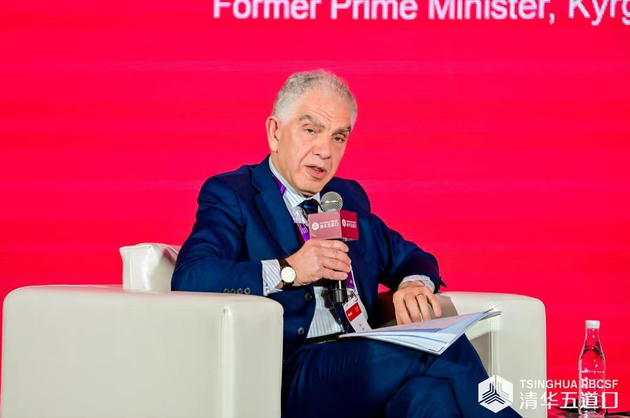
Marc Uzan Photo/provided to NBD
Absent a major shock in the United States, such as a fiscal shock, Uzan said he expects “a more gradual, uneven transition rather than a discontinuity” over the coming decade.
In his view, a multipolar monetary system is emerging, with the dollar, the euro and the RMB playing larger roles, while regional currencies may become more important in their own neighborhoods. He pointed to Europe as an example, saying geopolitical shocks and changes in the international financial order are pushing some European countries to rethink the value of belonging to a larger currency area.
A more multipolar system, Uzan said, would distribute power and responsibility more widely. But it would also make coordination in global crises more complex.
Looking back at history, he noted that monetary multipolarity also appeared during the interwar years of the 1920s, when the dollar and sterling competed with each other. The lesson from that period, he said, was not encouraging.
“What made that period very dangerous was that there was no adequate coordination mechanism among countries,” Uzan said.
He argued that if the world is moving toward multipolarity today, it needs stronger mechanisms to support that transition, including multilateral institutions, central bank swap networks and a more functional Special Drawing Rights system.
Asked about the most urgent issue in reshaping the global financial system, Uzan said today’s challenge is different from past financial crises.
He said the breakdown of the Bretton Woods system in the 1970s and the emerging-market crises of the 1990s were painful, but there was still an institutional framework, including the IMF and the Bank for International Settlements, to help organize international cooperation.
“What we face today is a crisis of the system, questioning the foundational architecture itself,” Uzan said.
He argued that when the issuer of the global reserve currency uses that currency as an instrument of weaponization, and when the principal architect of multilateralism openly questions the value of the international financial order, the problem is no longer simply a market failure or a financial crisis.
“It is a legitimacy crisis,” he said.
Uzan said the world may now be witnessing the end of the international financial order as it has been known, with a new order—or possibly a new disorder—emerging.
“The next generation either will be able to build that order, or it is going to be more messy,” he said, adding that the future system may be more shaped by geopolitics, fragmentation and currency blocs.
Despite his concerns, Uzan said the goal should not be to abandon multilateralism, but to adapt it to new realities.
“We need to find a way to preserve what I call constructive multilateralism,” he said.


 川公网安备 51019002001991号