Photo/website of XPeng Motors
XPeng Motors announced its full-year 2025 and fourth-quarter financial results on March 20, marking a pivotal turning point in the company's trajectory toward profitability and AI-centric expansion.
Driven by a surge in vehicle deliveries and a maturing revenue structure, the company’s total annual revenue soared to 76.72 billion yuan, representing an 87.7% year-on-year increase.
While the fiscal year concluded with a net loss of 1.14 billion yuan, the fourth quarter delivered a historic milestone: a record revenue of 22.25 billion yuan and a net profit exceeding 380 million yuan, the company's first profitable quarter since its inception.
A significant shift in XPeng's business model is evident in the rising contribution of "services and others." This segment has evolved into a core pillar of growth, fueled by technical R&D service fees from automotive partners and a steady rise in parts and accessories sales.
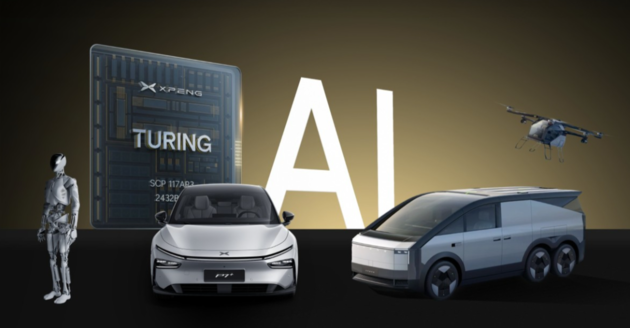
Underpinning this technical prowess is the proprietary Turing chip, which entered mass production in Q3 2025. With cumulative shipments already surpassing 200,000 units, Chairman He Xiaopeng projects a target of 1 million units for 2026, positioning the Turing chip as a leader in China’s high-power edge AI chip market.
Consequently, XPeng plans to transition its entire vehicle lineup to this in-house silicon starting in the second quarter.
The company's strategic focus for 2026 centers on the global rollout of its second-generation Vision-Language-Action (VLA) model. Since its promotional launch in early March, the VLA system has significantly boosted showroom traffic and shifted the sales mix toward higher-margin Ultra and Ultra SE variants.
XPeng aims to scale on-board model parameters to over 20 billion by year-end, which is expected to improve safety takeover intervals by up to 50 times. This software evolution serves as the foundation for XPeng's aggressive Robotaxi roadmap; the company intends to launch public trials with safety drivers in late 2026, with a goal of achieving fully driverless commercial operations by early 2027.
Beyond the automotive sector, XPeng is aggressively diversifying into robotics.
The IRON humanoid robot, which shares its underlying VLA 2.0 technology stack with XPeng’s vehicles, is scheduled for mass production by the end of 2026 with an initial monthly capacity target of over 1,000 units.
He Xiaopeng emphasized that unlike competitors who rely on Tier-1 suppliers, XPeng maintains a "full-stack" approach, developing everything from robotic joints to sensory systems in-house. To support this massive leap in "physical AI," the company has increased its R&D budget from 4.5 billion yuan to 7 billion yuan.
Global expansion remains a top priority for the current year.
XPeng plans to introduce four new models to international markets and expand its overseas retail network to 680 stores. By doubling international sales volumes and increasing the overseas revenue contribution to over 20%, XPeng aims to cement its status as a global leader in the transition toward intelligent, AI-defined mobility.


 川公网安备 51019002001991号