In 2014, Yuanmingyuan scholar Liu Yang saw the original Forty Scenes of the Yuanmingyuan in person for the only time at the National Library of France (Bibliothèque nationale de France).
This series of paintings from the Qianlong era is among the looted Yuanmingyuan artifacts scattered across France—and even the world—with the most complete evidence, the greatest value, and the highest likelihood of successful restitution.
On May 9, 2026, France promulgated a law on cultural property restitution of cultural property acquired through illicit appropriation (hereinafter referred to as Cultural Property Restitution Law).
The law seeks to establish a clearer and simpler legal framework for returning cultural assets acquired by France through illicit means, including looting, theft and sales conducted under coercion. It applies to cultural property acquired between Nov. 20, 1815 and April 23, 1972, excluding military items and certain archaeological objects.
Even so, Liu believes that the road for the Forty Scenes of the Yuanmingyuan to “return home” remains fraught with challenges—let alone the many other national treasures lacking sufficient evidence chains.
What artifacts from Yuanmingyuan have been dispersed? Where are they now?
To answer these questions, Liu Yang is one of the most authoritative experts in China. He began researching lost Yuanmingyuan artifacts at the age of 16 and has worked at Yuanmingyuan for over two decades. He currently serves as a member of the Academic Committee of the Chinese Society of Yuanmingyuan Studies, has published several monographs, and is widely regarded as the leading figure in cataloging dispersed Yuanmingyuan artifacts.
Recently, this post-80s scholar accepted an exclusive interview with National Business Daily (hereinafter referred to as NBD), sharing his years of research and pursuit of Chinese artifacts lost in France.
The “Forty Scenes of the Yuanmingyuan” was looted in 1860 and later sold—its legal status remains ambiguous
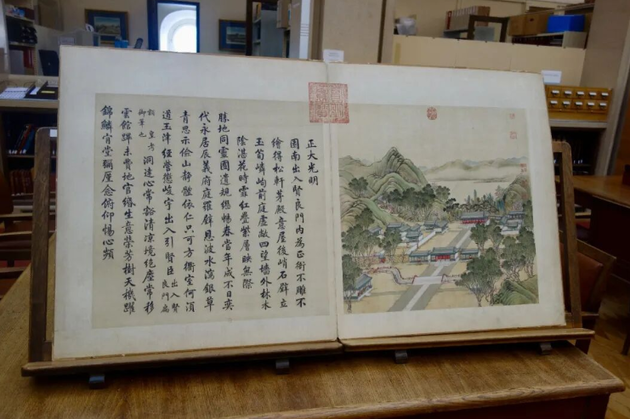
The album leaf Zhengda Guangming from Forty Scenes of the Yuanmingyuan is now housed in the Bibliothèque nationale de France. Photo/provided to NBD
The Forty Scenes of the Yuanmingyuan depicts forty major scenic sites of the imperial garden. It serves not only as an essential visual archive for studying the garden’s original layout, architectural forms, and imperial aesthetics, but also as one of the few artifacts that can clearly prove its origin from Yuanmingyuan.
Liu once personally examined the original at the National Library of France and conducted source verification.
NBD: Why is the Forty Scenes of the Yuanmingyuan so special among dispersed artifacts?
Liu Yang: It is not merely a work about Yuanmingyuan—it has clear records showing it was part of the imperial collection. Qianlong’s related poems and imperial edicts correspond directly to it. It is unquestionably a Yuanmingyuan artifact.
Moreover, its path of loss is relatively clear. After the Anglo-French forces looted Yuanmingyuan in 1860, it was taken by the French officer Charles Dupin.
Both key links—its original ownership by Yuanmingyuan and who removed it—are strongly supported by existing research. Therefore, it is one of the artifacts with the most nearly complete evidence chain.
NBD: Can it fall under France’s Cultural Property Restitution Law?
Liu Yang: Even so, it is not easy for it to enter the restitution process.
After bringing it to France, Dupin attempted to auction it due to financial difficulties, but failed. He then sold it to a secondhand bookstore or art dealer for about 4,000 francs. Just days later, a curator from the National Library of France discovered it and purchased it for 4,200 francs, incorporating it into the national collection.
The library still retains complete acquisition records, including purchase date, personnel involved, transaction price, invoices, and catalog numbers.
Therefore, the French side may prefer to interpret its acquisition as a legitimate purchase by a public institution rather than acknowledging it as a war-looted object.
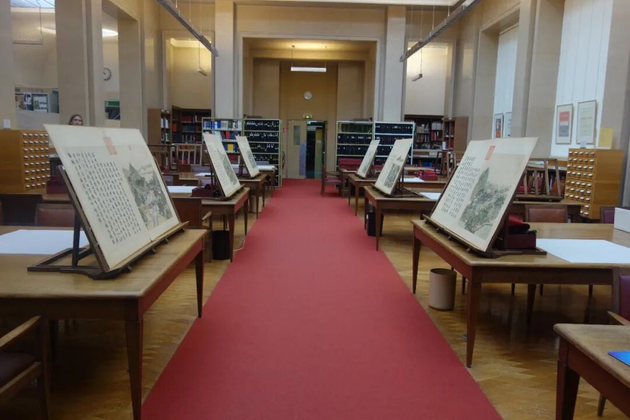
The Forty Scenes of the Yuanmingyuan housed in the Bibliothèque nationale de France. Photo/provided to NBD
NBD: What is the key difficulty in reclaiming it?
Liu Yang: The core issue lies in legal interpretation.
Even if an artifact was originally looted during war, should it still be defined as looted after passing through multiple private transactions and market exchanges? Or does subsequent legal purchase change its nature?
There is no dispute that Dupin looted it. However, the National Library fo France acquired it through purchase.
The key question is whether the definition of “illegal possession” in French law can trace back through later transactions to the original act of wartime looting.
The Forty Scenes of the Yuanmingyuan has about 80% of its evidence chain established—the remaining 20% depends on legal interpretation.
Searching French museums for lost treasures: provenance research is painstaking
In 2006, Liu discovered a pair of stone fish from the Grand Fountain ruins in a Beijing alley; they were later confirmed as Yuanmingyuan relics and returned in 2007. In 2021, he donated and published over 300 historical photographs collected worldwide. In 2023, seven white marble columns returned from Norway were revealed in his book Who Collects Yuanmingyuan.
Published in 2013, Who Collects Yuanmingyuan is the first systematic catalog of dispersed Yuanmingyuan artifacts. Liu spent ten years and self-funded trips across the world, documenting over 700 artifacts and establishing a preliminary global archive.
For frontline researchers, tracking overseas artifacts is a meticulous, time-consuming, and highly detailed task.
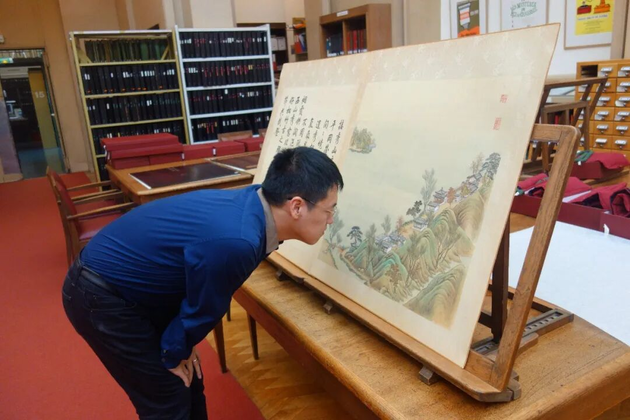
Liu Yang carefully views the painting Jieshan Xiufang from Forty Scenes of the Yuanmingyuan in the reading room of the Bibliothèque nationale de France. Photo/provided to NBD
NBD: How did you conduct research on Yuanmingyuan artifacts in France?
Liu Yang: We bought tickets and visited museums one by one, examining artifacts piece by piece.
French museums hold vast numbers of Chinese artifacts, many labeled only as “China,” “Orient,” or “Qing dynasty,” without specifying Yuanmingyuan origins.
To determine whether an object is related, researchers must understand Yuanmingyuan history, Qing court display systems, artifact typology, museum acquisition records, and archival clues.
For example, after visiting the Musée de l’Armée (Les Invalides), I identified possible leads, then returned to China to verify them through further research.
NBD: Can museum information alone reconstruct provenance?
Liu Yang: Cases like the Forty Scenes are extremely rare.
Public labels are only surface-level information. What truly matters are acquisition numbers, purchase files, donation records, auction archives, former owners, export paths, and early photographs.
Without these, even if style and craftsmanship match Yuanmingyuan, it is difficult to form convincing proof.
NBD: Which French institutions hold artifacts with restitution potential?
Liu Yang: The Palace of Fontainebleau is unavoidable.
Compared to the National Library of France, some of its holdings may have entered royal collections directly after the war, making them relatively more viable for restitution claims.
However, we still lack answers: how many such artifacts exist, which can be confirmed as Yuanmingyuan pieces, where they were originally displayed, and whether supporting archives exist.
NBD: What challenges did you face?
Liu Yang: Ironically, the new restitution law has made research more difficult.
Access to archives and cooperation has become more sensitive. For example, the Chinese Pavilion at Fontainebleau is not regularly open, making systematic study extremely difficult.
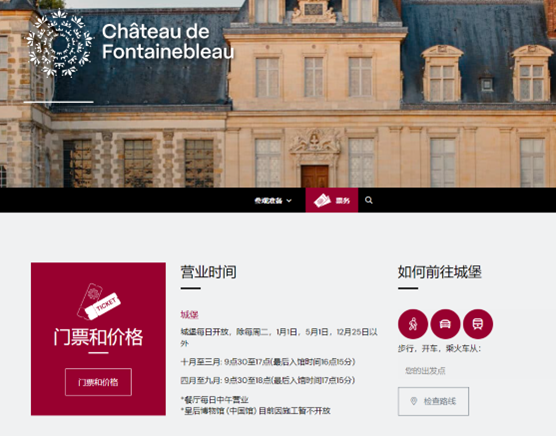
On May 13, the official website of the Palace of Fontainebleau announced that the Chinese Pavilion is temporarily closed for construction.
The hardest barrier: proving an object is from Yuanmingyuan
Under French law, restitution requires proving—through serious, precise, and corroborated evidence—that an object was unlawfully taken between November 20, 1815, and April 23, 1972.
NBD: What is the biggest obstacle today?
Liu Yang: The key is professional rigor.
We must determine: whether it truly belonged to Yuanmingyuan, where it was displayed, when and how it left China, where it is now, and whether supporting documents exist.
Only then can legal channels become viable.
Even the Forty Scenes, with clear ownership and looting history, still faces legal disputes due to later transactions. Most other artifacts fail at the first step: proving they are from Yuanmingyuan.
NBD: So claims must be specific to individual objects?
Liu Yang: Exactly. France will not accept vague claims like “this room contains Yuanmingyuan artifacts.” Each claim must identify a specific object with a complete evidence chain.
In fact, we still do not know how many Yuanmingyuan artifacts were lost or where they all are.
The real task ahead is building a comprehensive system: global collection inventories, reconstruction of original palace layouts, cross-referencing overseas records, image databases, legal research, language expertise, and sustained institutional dialogue.
Even with a legal pathway, the journey for these artifacts to truly “come home” remains long.
Note: This article is the translated version of the original Chinese manuscript. While we have strived to ensure translation accuracy, the translated text may still contain imperfections or deviations from the original content. The original document shall prevail and serve as the authoritative version at all times.


 川公网安备 51019002001991号