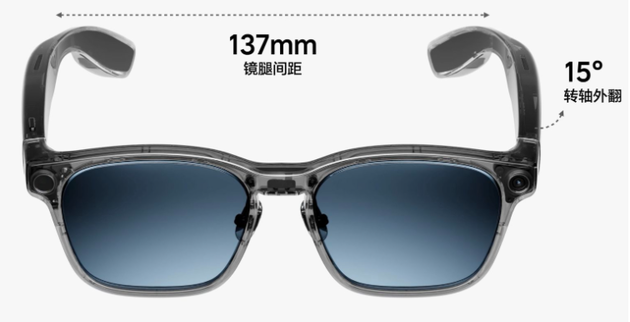
Photo/Provided to NBD
On Dec 3, Li Auto launched its Livis AI Glasses (starting at 1,999 yuan), marking a key move in its strategy to build an AI-centric ecosystem. Fan Haoyu, SVP of Product, emphasizes that AI is the company's "goal and purpose," not just a feature, underpinning a stable product framework.
The Livis, which Fan calls Li Auto’s "strongest AI accessory," integrates the "Li Xiang Tong Xue" AI assistant, offering visual Q&A, recognition, research, and vehicle control capabilities. Equipped with exclusive Zeiss lenses, the glasses function as a portable, wearable Li Xiang Tong Xue, capable of photos, videos, audio, calls, and music.
This launch supports Chairman Li Xiang’s vision to make Li Auto a global AI leader in embodied intelligence. Li Auto views its core as the AI model, which powers various terminals. The company classifies its products as embodied robots: cars are "car robots," cockpits are "space intelligence entities," and the new AI glasses are a "wearable robot."
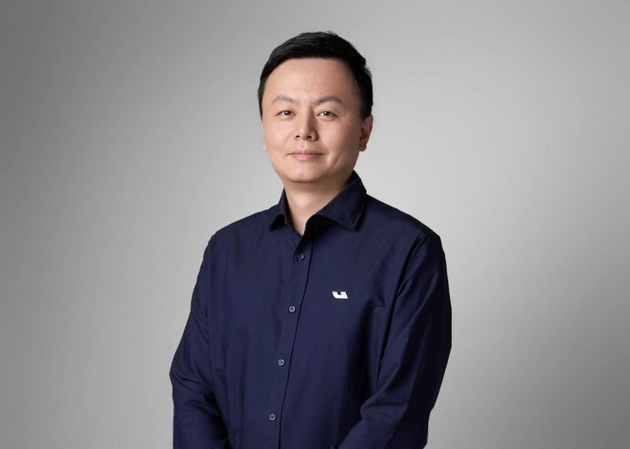
Fan Haoyu Photo/Provided to NBD
In the interview with National Business Daily (NBD), Fan asserts that the glasses are the ideal personal terminal for spatial intelligence, as true intelligence must stem from a product "closest to the user" that operates without added burden. The firm established a Wearable Robot Department this year, with Livis as its first mass-produced product. Future plans include display-enabled glasses and independent terminal devices.
The development, which began in 2024, leverages automotive-grade quality control and a shared Vision-Language-Action (VLA) foundation model that supports the glasses, cars, and other robots. This unified architecture allows for rapid multi-terminal reuse. Furthermore, Li Auto is using the glasses to refine technologies like streaming voice solutions before deploying them in vehicles. Manufacturing is handled by top-tier supplier Goertek.
The glasses will be sold online via the Li Auto App and JD.com, and offline at Li Auto and authorized Zeiss stores. Fan Haoyu stated that the company does not focus on competition or market share, but on solving "first-principle problems" for the user. For the first generation, the company aims for high conversion among its over 1.4 million car owners and expects gradual adoption from early technology innovators.


 川公网安备 51019002001991号